Welcome to Marine Rubber Fender Supplier - Nanjing Deers Industrial Co.,Ltd

Skype: evasky86
Whatsapp: +86 13376094258
E-mail: benny@chinarubberfender.com

Installation of Pneumatic Fender Guide
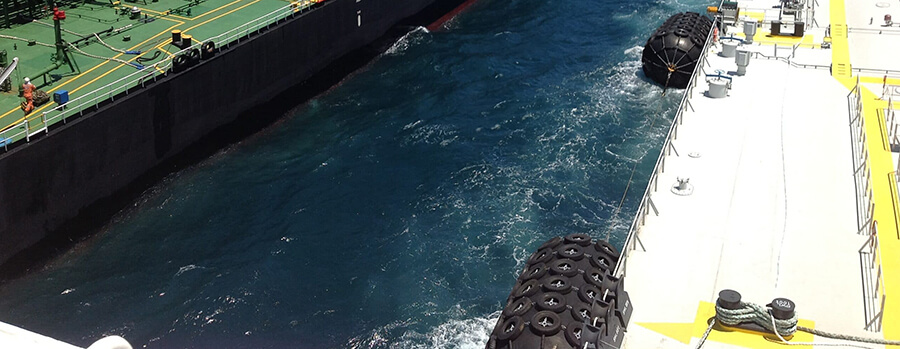
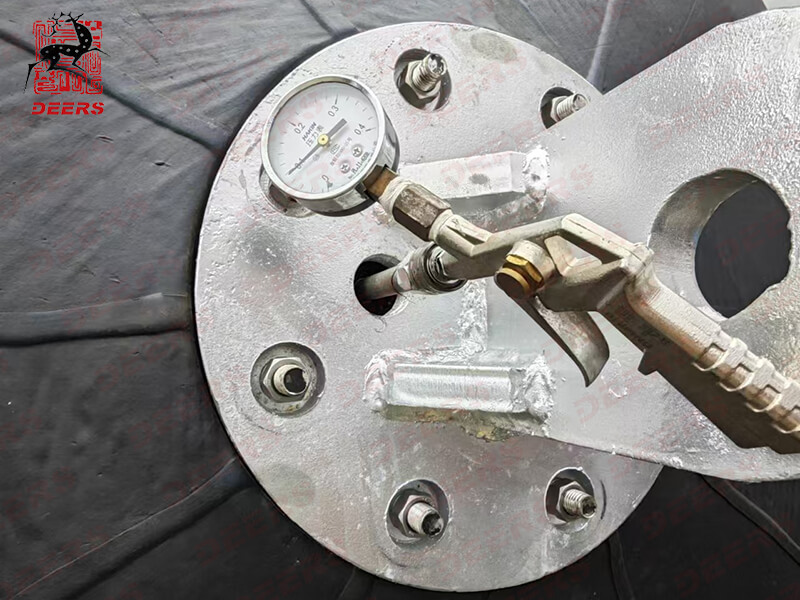
Proper installation of pneumatic fenders is essential to ensure safe berthing operations, optimal energy absorption, and long service life. This guide outlines the recommended installation procedures for pneumatic fenders, including preparation, inflation, tire chain fixing, and post-installation inspection.

pneumatic fenders (1)

1. Preparations Before Installation

Before installation, the site conditions and equipment should be thoroughly checked. Select a flat and stable installation area, ensuring that the berth or vessel contact point is free from sharp objects or obstacles that could damage the pneumatic fender.

  • Inspect the pneumatic fender body, including the tire net if applicable, as well as the chains and accessories.
  • Confirm that all components are complete and undamaged, such as inflation valves, safety valves, flanges, bolts, and shackles.
  • Prepare suitable inflation equipment (electric or manual pump) and pressure monitoring tools, such as a calibrated pressure gauge.
  • Prior to installation, clean the pneumatic fender surface to remove dirt or debris, and inspect the tire net for cracks, aging, or other visible defects.
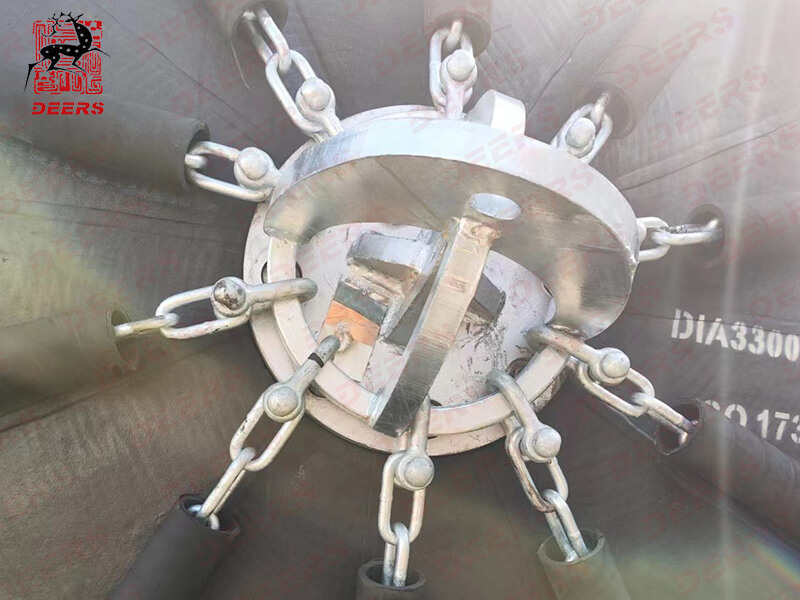
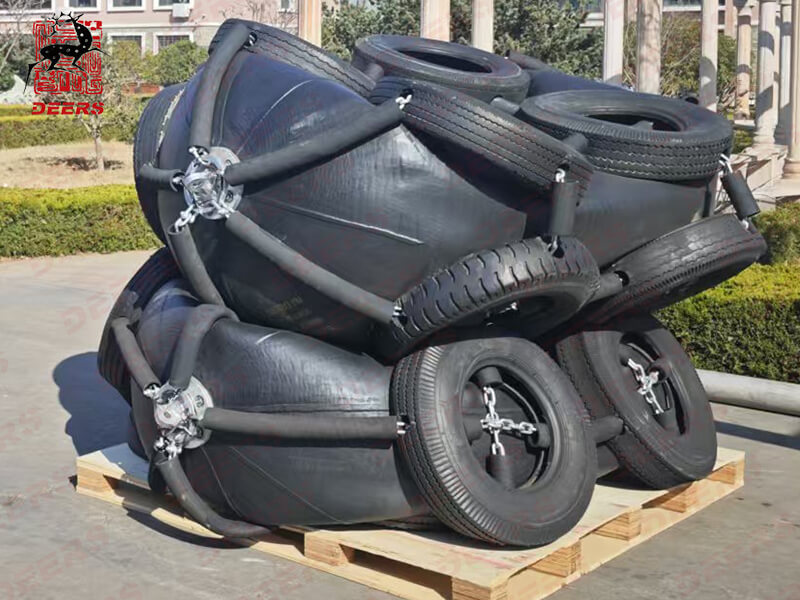
D3.3x6.5m pneumatic fenders -1
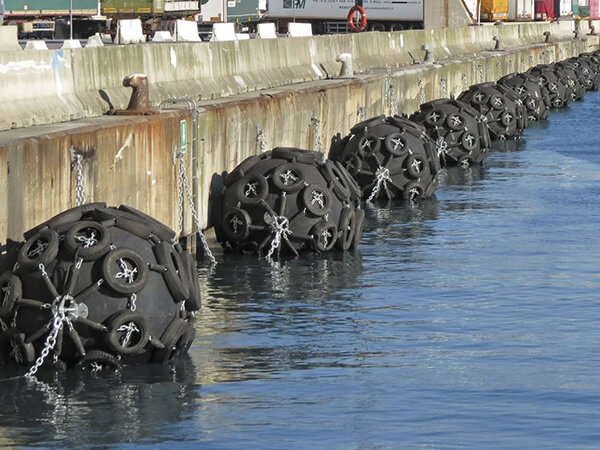
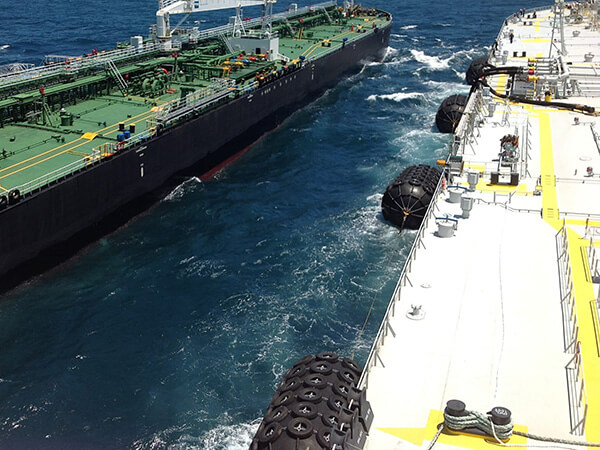
pneumatic rubber fenders - nanjing deers
Dia1200mm pneumatic fenders - nanjing deers

2. Pneumatic Fender Installation Steps

Inflation Procedure

  • Connect the inflation pump to the pneumatic fender inflation valve and ensure an airtight connection.
  • Inflate the pneumatic fender slowly to an initial low pressure (approximately 50 KPa). Check that the fender expands evenly without local deformation or abnormal bulging.
  • Gradually increase the internal pressure to the recommended working pressure, typically 80–100 KPa, depending on pneumatic fender size and vessel tonnage. Monitor the pressure continuously using a pressure gauge. Over-inflation must be strictly avoided. If pressure exceeds the safe limit, the safety valve will automatically release air.
  • Always follow the recommended inflation pressure provided by the manufacturer to ensure optimal energy absorption performance and operational safety.
  • After inflation, allow the pneumatic fender to stand for approximately 30 minutes to confirm stable pressure and absence of air leakage.

Fender Positioning

Lay the pneumatic fender flat at the installation location and ensure that its longitudinal axis is aligned with the vessel’s berthing direction.
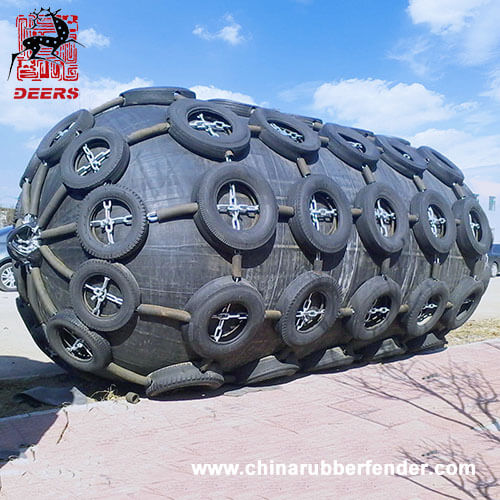
If the pneumatic fender is equipped with a tire net, wrap it evenly around the outer surface of the fender to enhance abrasion resistance and protect the rubber body.

Fender Fixing

Secure one end of the pneumatic fender to the quay structure or designated vessel fixing point using metal flanges or embedded bolts. Ensure all connections are properly tightened.

The opposite end may be designed as a floating connection to accommodate tidal variations and vessel movement during berthing operations.

pneumatic rubber fenders - nanjing deers -1
pneumatic rubber fenders - nanjing deers -2
pneumatic fenders-1

3. Tire Chain Fixing Steps

Select tire chains that match the pneumatic fender size and ensure sufficient length to wrap around the fender and fixing points. Chains should be wear-resistant and treated for corrosion protection to withstand marine environments.

Tire Chain Fixing Steps

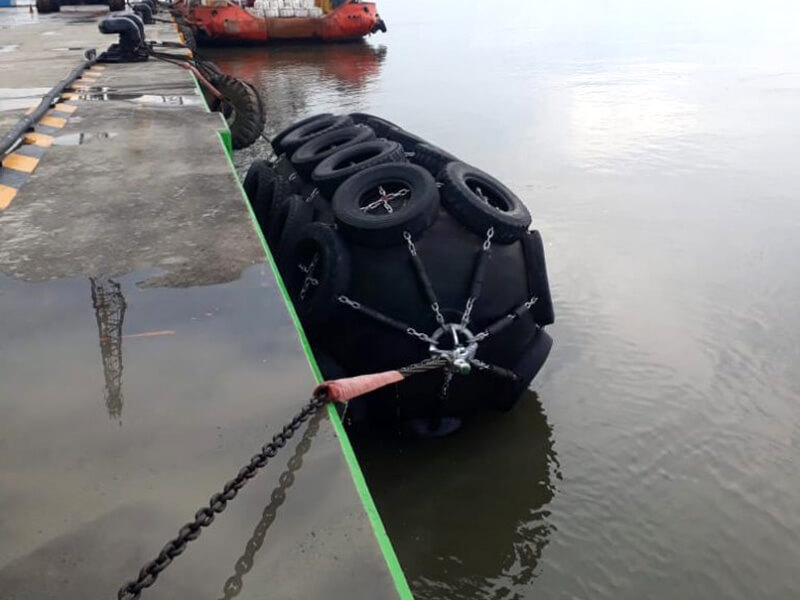
Fix one end of the chain to the metal flange or embedded anchor point of the pneumatic fender. Wrap the chain around the fender and tire net.

Apply a cross-wrapping configuration to improve stability and reduce the risk of slipping or overturning. Secure both ends of the chain using anti-loosening bolts, shackles, or appropriate connectors.

Stability Testing

  • Pull the chains lightly to test tension and confirm that they effectively restrain pneumatic fender movement.
  • Where conditions allow, verify chain stability under impact loads by simulating berthing conditions, such as using a small vessel.

4. Inspection and Maintenance After Installation

After installation, conduct a comprehensive inspection to confirm that the inflation pressure meets specifications and that chains and fixing points show no abnormal wear.

Inspection

  • Inspect the pneumatic fender surface and tire net to ensure proper positioning and absence of damage.
  • During operation, regularly monitor internal pressure, especially in environments with significant temperature fluctuations.
  • Clean chain connections to prevent salt corrosion and apply anti-rust treatment when necessary.
  • Before long-term storage or extended periods of non-use, deflate the pneumatic fender to a low-pressure state and store it in a dry area away from direct sunlight.

Safety Precautions

  • Installation should be carried out by trained personnel and avoided under adverse weather conditions.
  • Over-inflation is strictly prohibited to prevent pneumatic fender damage or safety hazards.
  • Chain tension and wear should be inspected regularly, and worn components must be replaced promptly.

Related Products

Prev:
Next: