Marine Rubber Airbag Repair Steps: Inspection, Patching, and Testing
Date:2026-02-05
Marine rubber airbags are widely used in ship launching operations due to their high load-bearing capacity, flexible operation and cost-effectiveness. However, long-term use or improper handling may cause surface damage, air leakage or abrasion. Understanding proper repair procedures is essential for ensuring functionality and extending airbags service life:
Step 1: Damage Inspection and Preparation
1. Damage Identification
Conduct a visual inspection for cuts, cracks, punctures or severe wear. Partially inflate and apply soapy or clean water to suspected leak points, observing for bubbles or using a pressure gauge.
2. Area Marking and Material Preparation
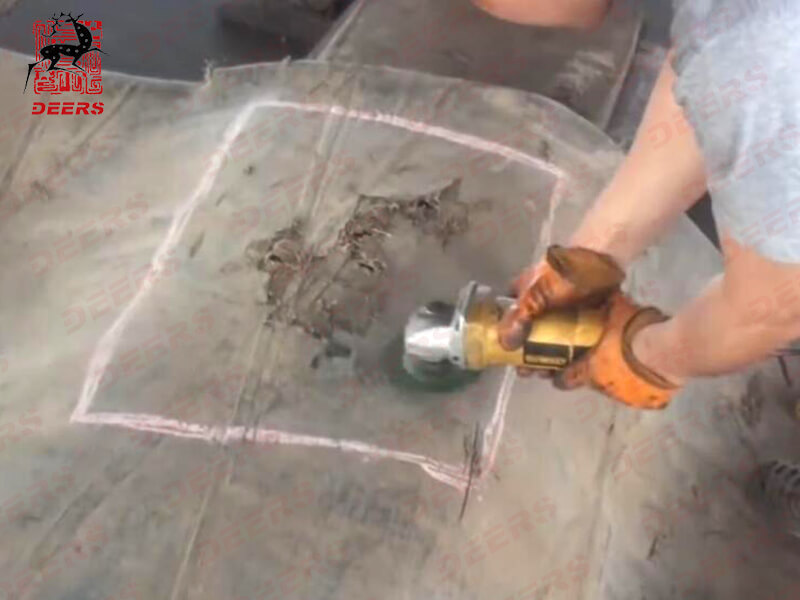
Mark the repair area with chalk or a marker and prepare tools and materials, including angle grinder, brush, hydraulic jack, steel plate, rubber block, bracket, large needle with cords, sandbag, roller, heating plate, rubber sheets, glue rubber, isolating cloth, etc.
Step 2: Deflation, Cleaning and Surface Preparation
1. Surface Cleaning
Fully deflate and clean the damaged area to remove oil, dust, salt and impurities, ensuring it is completely dry.
2. Surface Sanding
Sand the marked area using angle grinder until cord layer is exposed, avoiding damage to cord layer structure and and remove dust for repairing.
Step 3: Rubber Sheet Fabrication and Adhesive Application
1. Crack Stitching
Sew the cord layer using large needle with cords for deep or long cracks, spacing stitches 8–12 cm and starting 2–3 cm from crack edge to reinforce structural stability.
2. Rubber Sheet Cutting and Placement
Prepare rubber sheets slightly larger than the damaged area. Adjust layer number by damage severity and stagger layers with edges extended by 20mm.
3. Adhesive Application and Compaction
Apply special glue (natural rubber mixed with gasoline at a 1:8 ratio) evenly on the repair area and rubber sheet back, then allow it to set briefly before bonding and pressing firmly with hands or a roller to remove air and ensure adhesion.
Step 5: Post-Repair Inspection
1. Inflation Testing
Reinflate to working pressure, check for leaks with soapy water, and monitor pressure stability.
2. Visual Confirmation
Confirm rubber sheets are free of peeling, bubbles or leaks, and that the repaired area can withstand normal operating pressure. Repair is complete if all checks pass.
By following these five steps, ship launching airbags can be efficiently repaired, restoring functionality and extending service life. In case the airbag cannot be repaired, replacement with a new one is recommended.
Video of Marine Rubber Airbag Repair Procedures
RELATED
- Pneumatic Fenders Delivered Ahead of Holiday
- Wide Applications of Various Types Underwater Air Lifting Bags
- How Submerged Objects Are Salvaged
- 800H Cell Fender were Delivered to a Southeast Asian Client
- Why Choose Marine Airbags for Ship Launching and Landing?
- United States Tender – Channel Maintenance Dredging at Texas
- Arch Fender and Mooring Bollard Systems well installed on the Terminal, Nantong
- Installation of Pneumatic Fender Guide
