

Types of Marine Fenders: Features & Applications
Marine fenders are essential protective equipment used in ports, terminals, shipyards, and offshore facilities. They absorb berthing energy and reduce the impact forces generated when vessels come into contact with docks, other vessels, or marine structures — helping protect both ships and infrastructure from damage.
Marine fenders are available in various designs, each with different structural characteristics, energy absorption capabilities, and applications. Common types include cell fenders, cone fenders, arch fenders, cylindrical fenders, D-type fenders, pneumatic fenders, foam-filled fenders, and tugboat fenders.
Based on installation methods, structural design, and application, marine fenders fall into four broad categories:
Table of Contents
Fixed Rubber Fenders
Installed on quay walls, jetties, docks and other port structures, fixed rubber fenders absorb berthing energy through the elastic deformation of the rubber body. They are widely used in commercial ports thanks to their durability, reliable performance, and straightforward maintenance.

1.1 Cell Fenders
Among the most widely used rubber fenders for large commercial ports. Their cylindrical, cell-shaped structure provides good stability and efficient energy absorption under compression, distributing loads and reducing stress concentration.
Key Features: High energy absorption capacity · Stable under heavy berthing loads · Compatible with various frontal panel sizes
Applications: Container terminals, bulk cargo terminals, oil & gas terminals, large commercial berths.
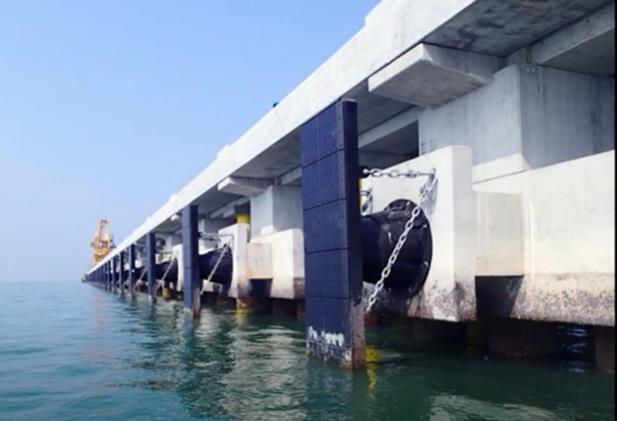
1.2 Cone Fenders
Feature a tapered, cone-shaped rubber body for high energy absorption efficiency and large compression deflection. They allow greater rated deflection than conventional cell fenders, enabling efficient absorption within a compact space.
Key Features: Large compression deflection · High energy efficiency · Good under angular compression
Applications: Container terminals, LNG terminals, bulk cargo berths, large port facilities.
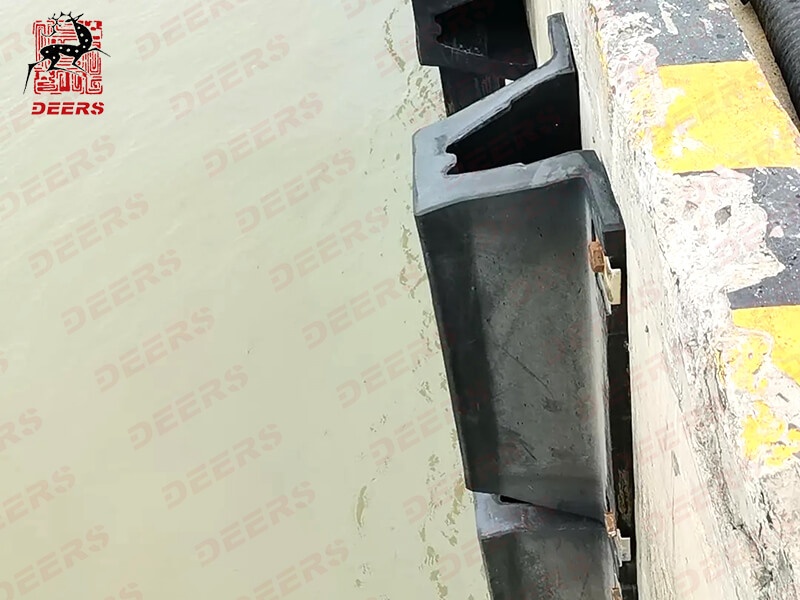
1.3 Arch Fenders (V Fenders)
Feature a simple arched rubber structure that absorbs berthing energy through compression while distributing loads to the supporting structure through a wide base. Some designs incorporate UHMW-PE pads or frontal panels.
Key Features: Simple & durable · Easy installation & replacement · Various contact surfaces
Applications: General cargo terminals, small & medium ports, workboat berths, docking facilities.
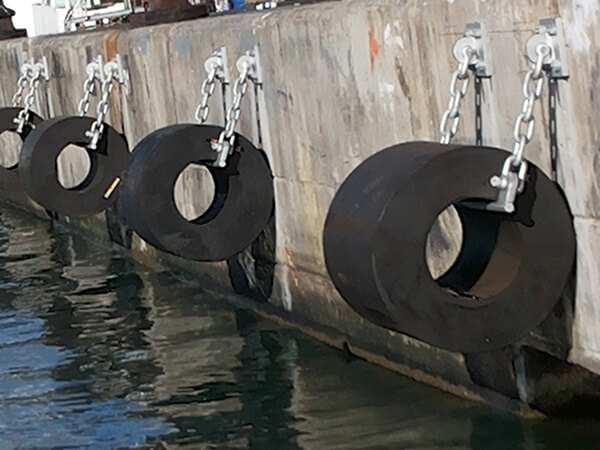
1.4 Cylindrical Fenders
Traditional hollow cylindrical rubber fenders installed horizontally or vertically using chains, rods or other mounts. Their circular cross-section accommodates vessel movement and changing contact angles during berthing.
Key Features: Simple & economical · Flexible installation · Accommodates vessel movement
Applications: Traditional ports, fishing harbors, workboat berths, barge terminals.

1.5 D-Type Fenders (DD / DO)
Compact rubber fenders with a D-shaped cross-section, installed using bolts or mechanical fixing systems where space is limited. Common designs include DD and DO fenders, each with distinct internal hollow profiles.
Key Features: Compact structure · Versatile installation · Elastic deformation under compression
Applications: Quay walls, floating docks, workboats, tugboat side protection.

1.6 GD Fenders (Wing-D)
Developed from the conventional D-type profile, with extended wing-shaped sections on both sides for stable installation and effective cushioning. Available in different sizes and configurations.
Key Features: Wing-shaped cross-section · Stable mounting · Good durability & cushioning
Applications: Tugboats, workboats, floating structures, quays, marine facilities.
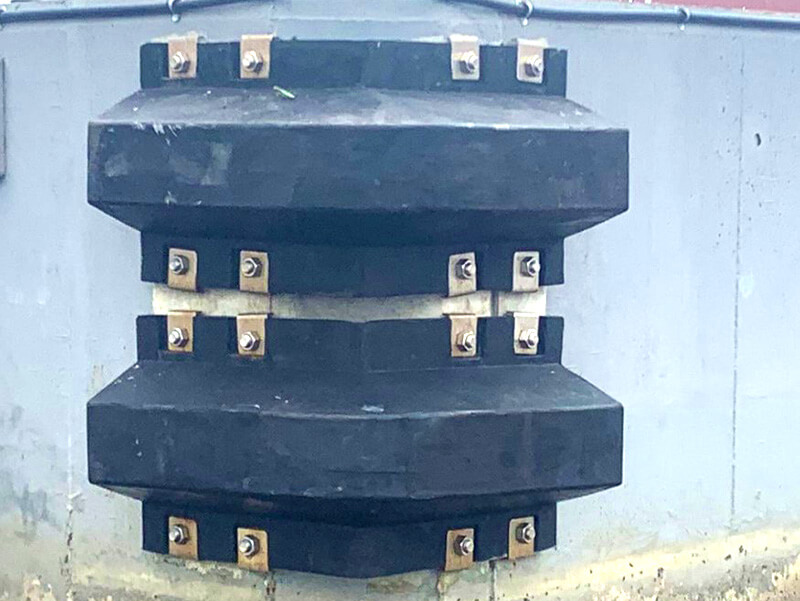
1.7 Corner Fenders
Specially designed to protect corners and exposed edges of marine structures — areas particularly vulnerable to accidental vessel contact. Often developed from D-type or arch profiles to match corner configurations.
Key Features: Protects exposed corners · Prevents direct vessel contact · Customizable dimensions
Applications: Quay corners, dock entrances, exposed berth edges, vulnerable structures.

1.8 MV Fenders
Feature a specially designed rubber profile providing cushioning protection for various marine structures. Their compact structure allows installation in different arrangements depending on space and performance needs.
Key Features: Compact profile · Simple installation · Durable structure · Multiple sizes
Applications: Commercial ports, workboat berths, general cargo terminals.

1.9 Square Fenders
Feature a square or rectangular cross-section for localized protection, available in solid or hollow configurations. Their flat contact surface suits compact protective arrangements.
Key Features: Compact design · Solid or hollow · Convenient installation
Applications: Small docks, barges, workboats, floating platforms.
Floating Marine Fenders
Designed to float on the water surface and accommodate changes in water level and vessel movement. Unlike permanently mounted rubber fenders, many can be deployed, repositioned or removed according to operational needs — widely used in ship-to-ship (STS) operations and offshore facilities.
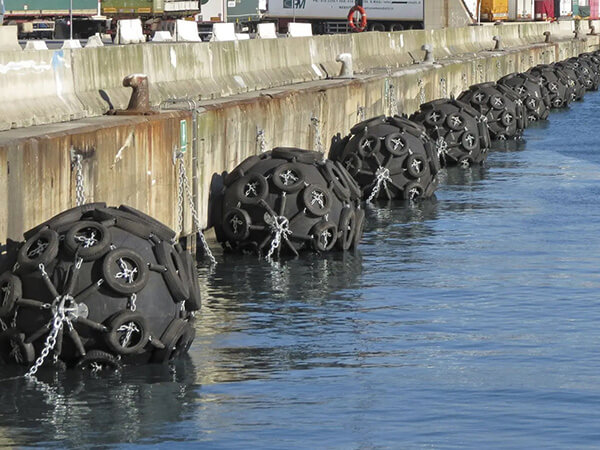
2.1 Pneumatic Fenders
Floating devices using compressed air to absorb berthing energy. On contact, the rubber body deforms and internal air pressure rises, absorbing impact energy. Common ratings include 50 kPa and 80 kPa.
Key Features: Excellent energy absorption · Low hull contact pressure · Self-floating · Easy deployment
Applications: Ship-to-ship cargo transfer, tanker operations, offshore platforms, temporary berthing.
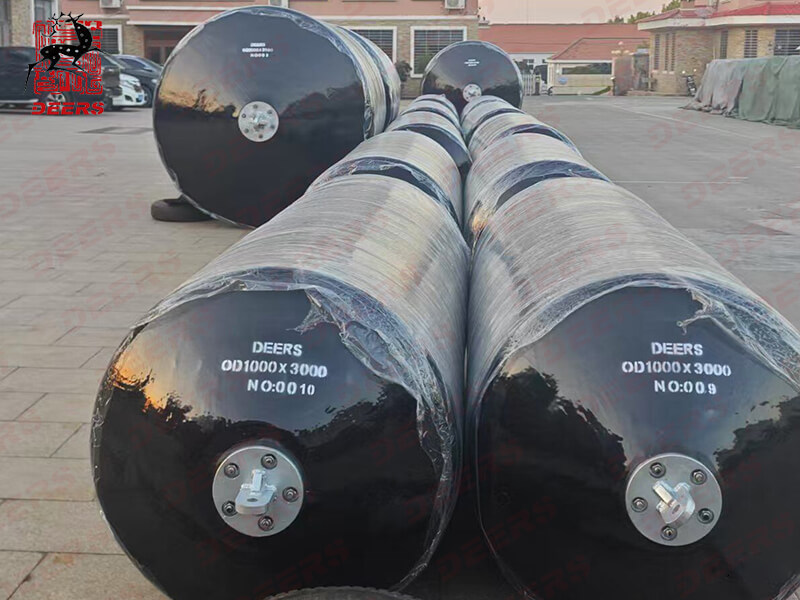
2.2 Foam-Filled Fenders
Constructed with a closed-cell foam core and a durable outer skin (polyurethane or elastomer). Unlike pneumatic fenders, they do not rely on internal air pressure — even local damage does not cause sudden deflation.
Key Features: No inflation to maintain · Low water absorption · Low maintenance · Customizable
Applications: Ship-to-ship operations, offshore platforms, commercial ports, marine engineering.

2.3 Donut Fenders
Specialized floating fenders designed to fit around fixed piles or tubular guides. Their ring shape lets them rotate around a pile while moving vertically with tidal changes.
Key Features: Moves with tides · Rotates around pile · Cushioning protection
Applications: Berthing dolphins, turning dolphins, ferry terminals, bridge protection.
Tugboat Fenders
Tugboats frequently contact larger vessels during pushing, towing and harbor maneuvering. Specialized rubber fenders around the bow, stern and sides protect the hull and provide effective contact surfaces.

3.1 Tug Cylindrical (Sausage) Fenders
Elongated cylindrical rubber fenders installed around tugboat bows and sterns, designed to withstand substantial contact loads during pushing operations. Available in various diameters and lengths.
Key Features: Robust cylinder · Heavy contact loads · Various lengths & diameters
Applications: Harbor tugboats, workboats, vessels in pushing operations.

3.2 W Fenders
Feature a distinctive W-shaped cross-section, installed vertically around tugboat bows and sterns. Grooves on the contact surface improve grip, while flexible side wings allow installation on curved hulls.
Key Features: Large contact area · Grooved surface for grip · Suits curved hulls
Applications: Harbor tugboats, offshore support vessels, specialized workboats.

3.3 M Fenders
Feature an M-shaped profile for tugboat bow and stern protection. A relatively large contact area and good flexibility let them follow curved hull contours, with grooves improving grip during pushing.
Key Features: Wide contact surface · Flexible structure · Adapts to curved hulls
Applications: Harbor tugboats, workboats needing bow or stern protection.
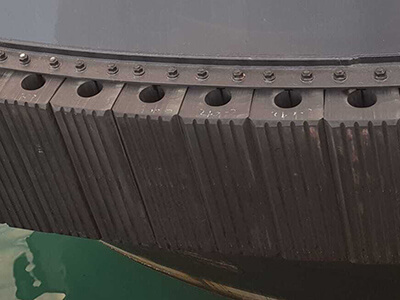
3.4 Keyhole Fenders
Feature a distinctive keyhole-shaped opening in their cross-section, installed around tugboat bows and sterns. Available with smooth or grooved contact surfaces.
Key Features: Keyhole internal profile · Easy installation · Smooth or grooved surfaces
Applications: Tugboat bows, sterns, other workboat protection systems.
Combined Tugboat Fender Systems
In practice, tugboats use several fender types together. Sausage, W, M and keyhole fenders serve as pushing fenders around the bow and stern, while D-type, DD-type and square fenders act as side belting fenders along the hull during berthing and lateral contact.
Special-Purpose Fenders

4.1 Roller Fenders
Specialized fenders for locations where vessels pass through narrow entrances or restricted waterways. Rotating components allow rolling contact, reducing sliding friction while providing cushioning and guidance.
Key Features: Rolling contact reduces friction · Guides vessels · Cushioning & impact protection
Applications: Dock entrances, lock entrances, narrow channels, quay corners.
Comparison of Marine Fender Types
A quick reference of the main features and typical uses of the most common marine fender types.
| Fender Type | Main Features | Typical Applications |
|---|---|---|
| Cell Fender | High energy absorption, stable structure | Medium and large ports |
| Cone Fender | Large deflection, efficient energy absorption | Container and LNG terminals |
| Arch Fender | Simple structure, easy installation | General cargo terminals |
| Cylindrical Fender | Flexible installation, economical design | Traditional docks, workboat berths |
| D Fender | Compact structure, versatile installation | Quays and vessel protection |
| GD / Wing-D Fender | Wing-shaped profile, stable mounting | Tugboats, quays, workboats |
| Pneumatic Fender | Self-floating, low hull pressure | STS and ship-to-berth operations |
| Foam-Filled Fender | Low maintenance, no inflation required | STS and offshore facilities |
| Donut Fender | Rotates around piles, moves with tides | Berthing dolphins, bridge protection |
| W / M / Keyhole Fender | Specialized profiles for pushing | Tugboat bows and sterns |
| Roller Fender | Rolling contact, reduced friction | Dock and lock entrances |
Conclusion
Marine fenders are available in a wide range of designs to accommodate different vessel operations and marine environments. Fixed rubber fenders — cell, cone, arch, cylindrical and D-type — are widely used in ports and terminals. Floating fenders, including pneumatic and foam-filled, serve ship-to-ship and offshore applications.
Specialized tugboat fenders — W, M, keyhole and sausage — protect during pushing and maneuvering, while donut and roller fenders serve specific marine-structure requirements. Each type has its own structural characteristics and applications, making marine fenders essential to modern port infrastructure and vessel protection.