Welcome to Marine Rubber Fender Supplier - Nanjing Deers Industrial Co.,Ltd

Skype: evasky86
Whatsapp: +86 13376094258
E-mail: benny@chinarubberfender.com

Marine Mooring Bollards: Essential Components for Safe Vessel Mooring
Marine bollards are critical mooring components used to secure vessels safely at ports, harbors, jetties, quays, wharves, and dolphins. They provide a reliable anchor point for mooring lines and play an important role in ensuring safe and stable vessel operations.

Several bollard designs are widely used in the marine industry, each suited to different mooring requirements:

T-Head Bollards

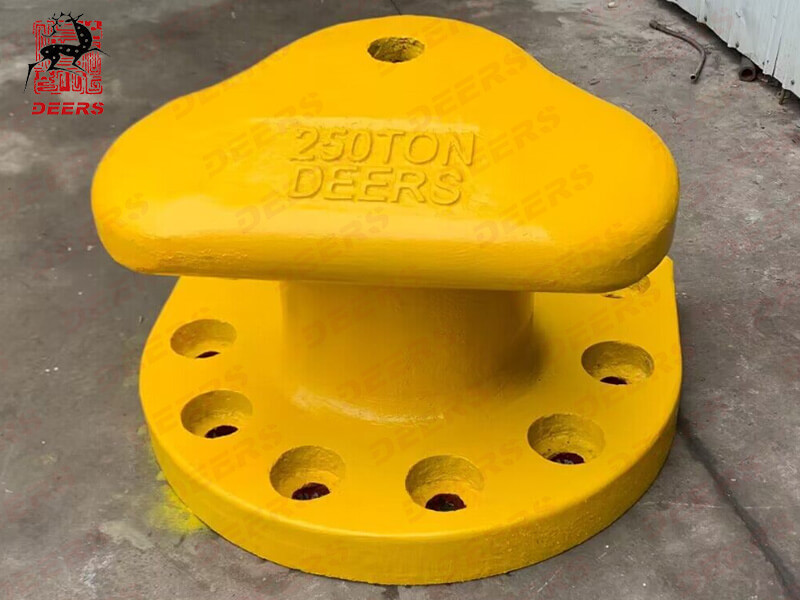
T-Head bollards feature a “T”-shaped top that allows mooring lines to be secured from various angles. They are one of the most popular designs worldwide and are suitable for a wide range of vessel sizes and mooring conditions.

250 Ton T type bollards-nanjing deers-1
Kidney Bollards

Kidney Bollards

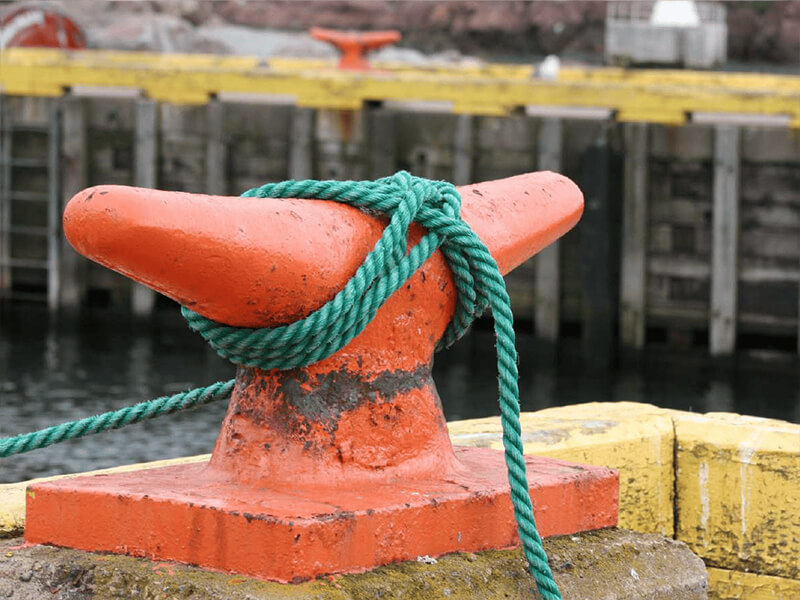
Kidney bollards offer a simple and economical solution for locations with low to moderate tidal variations. They are commonly used where mooring lines are not subjected to large vertical angles.

Cleat Bollards

Cleat bollards are designed for smaller vessels and marina applications. Their compact design makes them ideal for light-duty commercial and recreational mooring operations.

Cleat Bollards
mooring bollard-1

Double Bitt Bollards

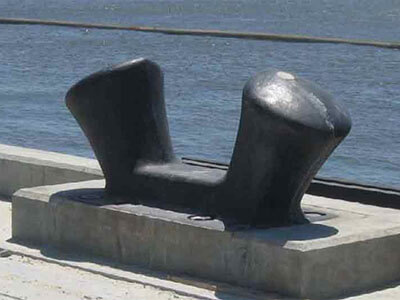
Also known as Twin Horn bollards, Double Bitt bollards are well suited for areas with high concentrations of mooring lines. Their design allows multiple lines to be secured efficiently while minimizing installation space.

Single Bitt Bollards

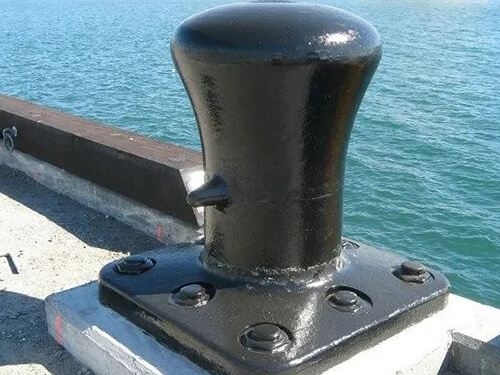
Single Bitt bollards are particularly effective in locations with significant tidal fluctuations. They can accommodate steep mooring line angles and multiple mooring lines.

Factors to Consider When Selecting a Bollard

Choosing the correct bollard requires careful evaluation of several factors, including:

  • Vessel size and mooring loads
  • Mooring line arrangement and angles
  • Tidal range and water level variations
  • Wind, current, wave, and swell forces
  • Berth layout and operational requirements
  • Material selection and corrosion resistance

Ductile iron and cast steel are among the most commonly used materials due to their strength, durability, and long service life.

Marine bollards are a simple yet vital part of any mooring system. Selecting the appropriate bollard type based on operational conditions and environmental factors helps improve safety, reliability, and long-term performance for port and harbor facilities.

Prev: