

Minimum Practical Velocity in Dredging Pipelines: Why Does It Matter?
Date:2026-10-08
In dredging operations, sediment is mixed with water to form slurry and transported through pipelines to the discharge area. During this process, slurry flow velocity is important for preventing pipeline blockage and controlling operating costs.
If the slurry flows too slowly, sediment may settle inside the pipeline. But if it flows too fast, pipeline wear and energy consumption may increase.
So, how fast should slurry flow? This brings us to an important concept: Minimum Practical Velocity (Vp).
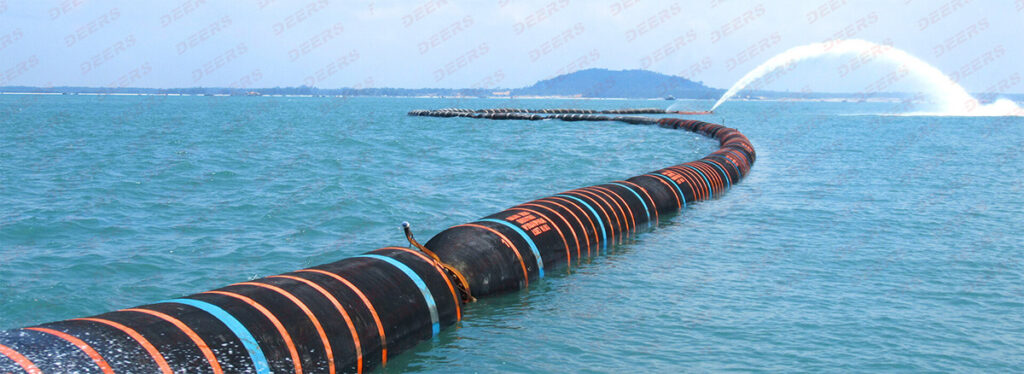
What Is Minimum Practical Velocity in Dredging?
Minimum Practical Velocity (Vp) is the minimum safe slurry flow velocity required to prevent sediment from settling at the bottom of a dredging pipeline and ensure smooth transportation to the discharge point.
It is measured in meters per second (m/s).
In dredging operations, the actual slurry velocity should generally remain at or above Vp to maintain reliable transportation.
However, higher velocity is not always better.
What Happens When Slurry Velocity Is Too Low or Too High?
1. V < Vp: Sediment Deposition and Pipeline Blockage

When slurry velocity falls below Vp, sediment transportation can no longer be reliably maintained.
Sand and other solid particles may gradually settle at the bottom of the pipeline. As sediment builds up, the available flow area becomes smaller, increasing the risk of pipeline blockage.
This can interrupt dredging operations, delay projects, and increase maintenance costs.
2. V>> Vp: Increased Wear and Energy Consumption

When slurry velocity is much higher than necessary, sand and gravel may cause more severe wear on the inner walls of the pipeline.
Higher flow velocity also generally increases pipeline resistance, requiring more pumping power.
As a result, energy consumption, maintenance requirements, and operating costs may increase.
The goal is to maintain sufficient slurry velocity without unnecessary excess.
How Is Minimum Practical Velocity Calculated?
According to technical reference materials from China Communications Construction Company (CCCC), Minimum Practical Velocity can be calculated using the following empirical formula:
Vp = Kv × Vc
Where:
- Vp: Minimum Practical Velocity (m/s)
- Vc: Critical Velocity (m/s)
- Kv: Empirical coefficient based on sediment type
The reference coefficients for different sediment types are:
| Sediment Type | Silt and fine-grained soil | Fine sand | Medium to coarse sand | Coarse sand and gravel |
|---|---|---|---|---|
| Kv | 1.10 | 1.20 | 1.25 | 1.30 |
Note: These coefficients are based on the referenced empirical method and should be checked against the original source before use in engineering calculations.
Critical Velocity (Vc) is affected by several factors, including sediment particle size, particle density, pipeline diameter, and slurry characteristics.
In general, larger and heavier particles are more likely to settle and may require higher transportation velocities.
How Is Minimum Practical Velocity Calculated?
Minimum Practical Velocity is also worth considering when choosing dredging pipelines.
For example, pipeline diameter affects slurry velocity. At the same flow rate, a larger pipe results in a lower velocity, which may increase sediment deposition risks.
Meanwhile, when transporting abrasive materials such as coarse sand or gravel, pipeline wear resistance becomes important. Depending on project requirements, conventional rubber discharge hoses, armored hoses, or ceramic-lined hoses may be considered.
Pipeline selection should therefore take into account the transported material, pipe diameter, pump capacity, and operating conditions.
At Nanjing Deers, we supply self-floating hoses, discharge hoses, suction hoses, and other dredging pipeline products for different project requirements. Contact us to discuss suitable pipeline solutions for your dredging operations.
RELATED
- Pneumatic Fender Accessories Successfully Delivered
- Cell Fenders Successfully Installed in Southeast Asia
- Danforth Anchor: Design, Applications & Size Selection Guide
- DN1000mm Dredge Ball Joints Shipped to Southeast Asia for Dredging Project
- 2.5×4m pneumatic fenders have been successfully installed at the berth
- Repeat Order of D-Type Fenders Successfully Dispatched
- Complete Dredging Pipeline System
- ID900 dredging suction hoses have been delivered for CCCC