Welcome to Marine Rubber Fender Supplier - Nanjing Deers Industrial Co.,Ltd

Skype: evasky86
Whatsapp: +86 13376094258
E-mail: benny@chinarubberfender.com

Complete Dredging Pipeline System
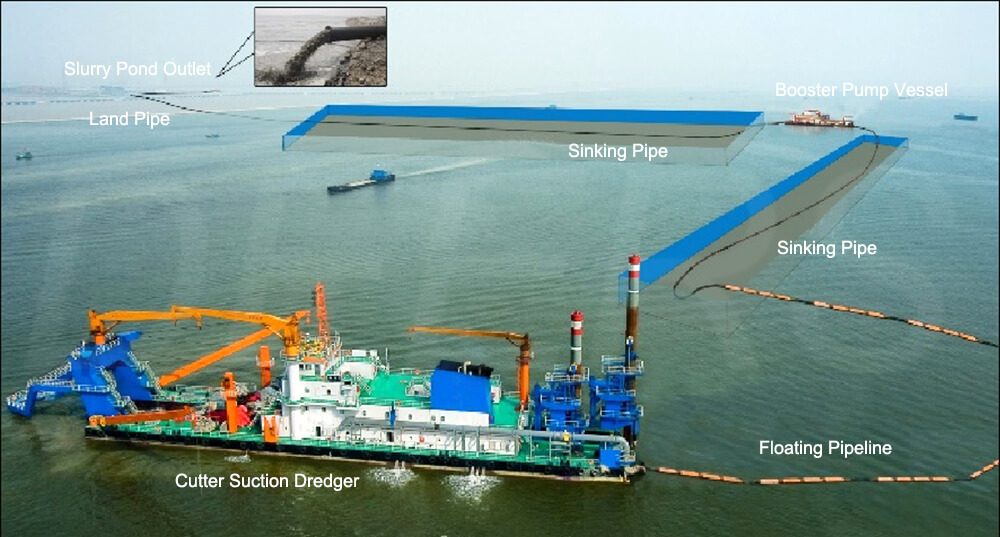
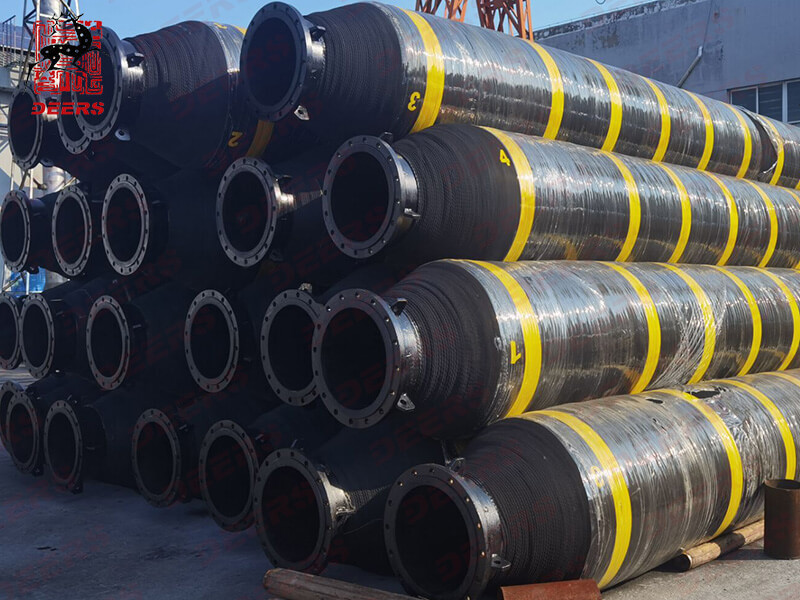
Dredging pipelines are much more than a simple pipe used to transport sand or slurry. In an actual dredging project, a complete pipeline system may consist of floating hoses, discharge hoses, suction hoses, HDPE pipes, steel pipes, pipe floats, dredge ball joints, expansion joints, tapered floating hoses, reducers, bends and other connecting components.

Each component performs a different function. A typical dredging pipeline can extend from several hundred meters to several kilometers. Rather than using one single type of pipe throughout the entire distance, contractors normally combine different pipeline products according to the working environment.

For example, a dredging pipeline may look approximately like this:

Dredger → Flexible hose / ball joint → Floating pipeline → Submerged pipeline → Shore pipeline → Discharge area

Some sections must float on the water. Some need to move together with the dredger. Others are installed underwater or laid on land. Certain parts need high flexibility, while others need excellent abrasion resistance or high working pressure.

Understanding the different types of dredging pipeline components therefore helps contractors design a more reliable and efficient slurry transportation system.

dredging pipelines

1. Floating Hoses

Floating hoses, also called self-floating dredging hoses, are among the most recognizable components of a floating dredging pipeline.

Unlike ordinary discharge hoses, floating hoses contain integrated buoyancy material inside the hose body. This allows the hose to remain on the water surface without requiring separate external floats.

Because the buoyancy is integrated into the hose body, floating hoses can create a relatively clean and flexible floating pipeline.

Floating hoses are particularly useful around areas where the pipeline needs to move frequently together with the dredger.

ID450 floating hoses - nanjing deers 02

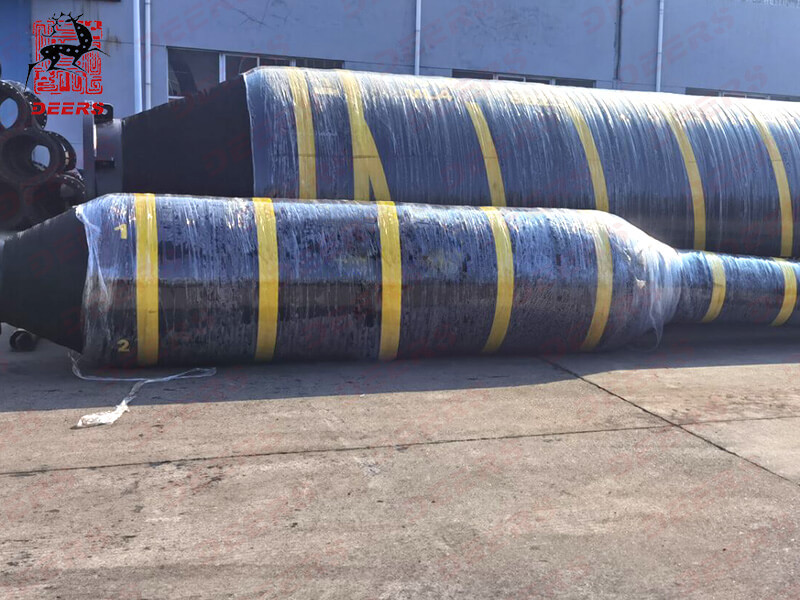
2. Tapered Floating Hoses

ID450 taperes floating hoses - nanjing deers

Tapered floating hose has different diameters at its two ends.

Its main purpose is to create a gradual transition between pipeline sections of different sizes while maintaining flexibility and buoyancy.

Tapered hoses are frequently associated with the floating discharge system of a Trailing Suction Hopper Dredger (TSHD), particularly around bow-blowing pipeline arrangements.

A bow-blowing hose system can include flexible and floating hose sections connecting the vessel’s bow discharge arrangement with the main floating pipeline.

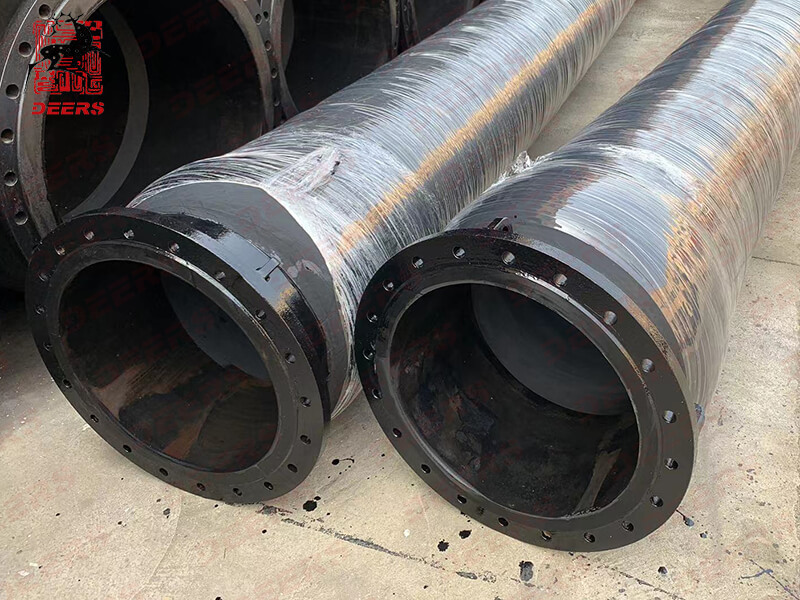
3. Discharge Hoses

Dredging discharge hoses are flexible rubber hoses designed to transport dredged slurry under positive pressure.

They are commonly installed between rigid pipeline sections where a certain amount of movement or flexibility is required.

Unlike self-floating hoses, standard discharge hoses normally do not contain enough integrated buoyancy material to independently support themselves on the water.

The current ISO standard for relevant reinforced dredging hose assemblies is ISO 28017:2026, which covers dredging hoses for mixtures containing water, silt, sand, coral and small stones within the specified application conditions.

ID500 discharge hoses - Nanjing Deers 2

4. Suction Hoses

suction rubber hoses to middle east-2

Dredging suction hoses are installed on the suction side of a dredging system.

Unlike discharge hoses, which mainly withstand internal positive pressure, suction hoses must also resist collapse caused by negative pressure or vacuum conditions.

Suction hoses may be installed: Between the suction pipe and dredge pump, Around cutter suction systems, On dredger ladder pipeline sections, Between moving suction pipeline components, In sand and slurry pumping systems.

They provide flexibility while maintaining the internal passage needed for slurry transportation.


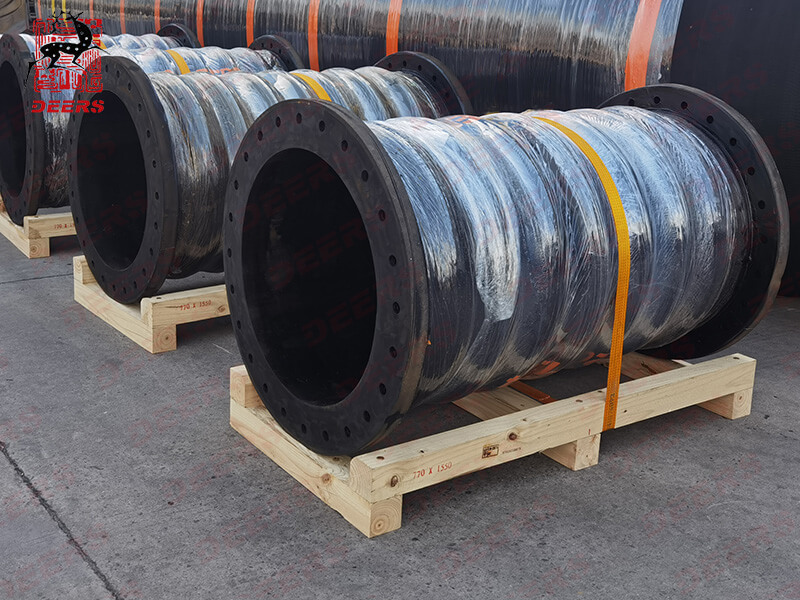
5. Rubber Expansion Joints

Rubber expansion joint is another flexible component commonly used in slurry and dredging pipeline systems.

Unlike a ball joint, which is mainly designed to permit angular articulation, an expansion joint can help absorb:

  • Vibration
  • Small axial displacement
  • Lateral movement
  • Installation misalignment
  • Pipeline vibration from pumps

They are often installed around pumps, rigid pipeline sections or locations where vibration isolation is beneficial.

expansion joint - Nanjing Deers

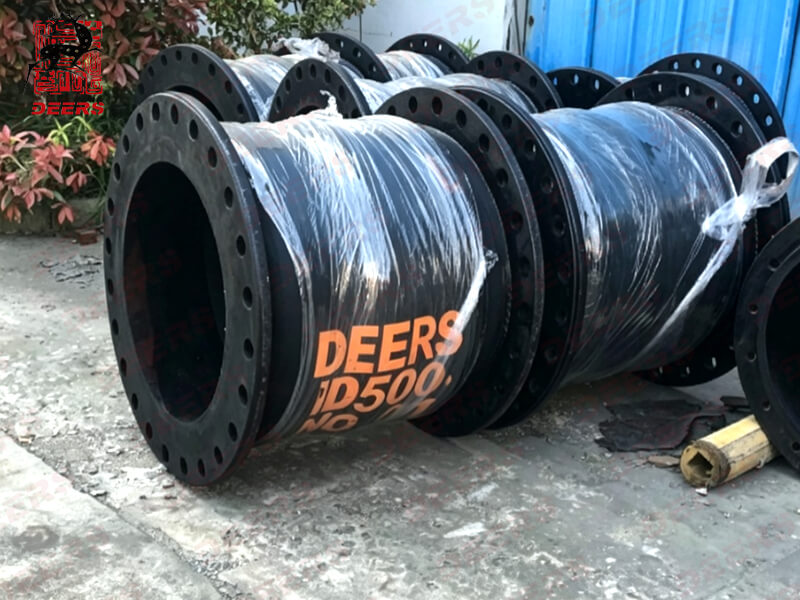
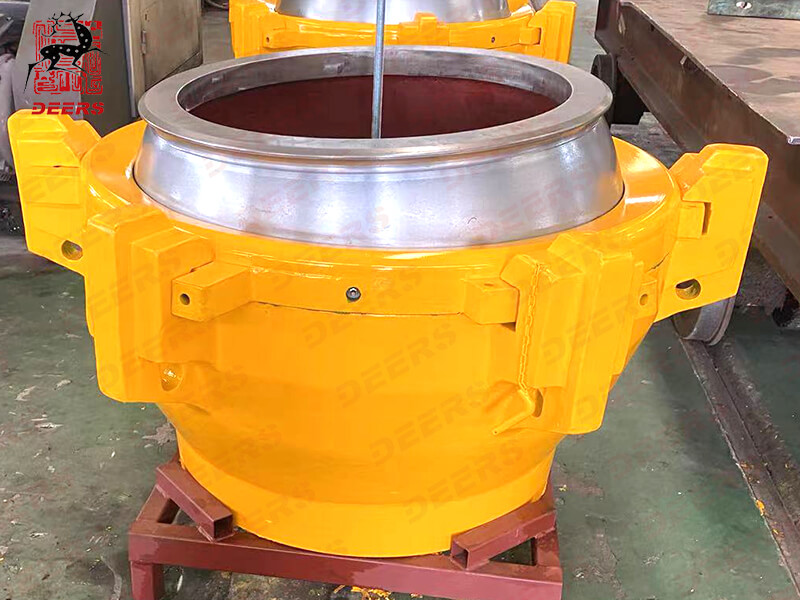
6. Dredge Ball Joints

dredge ball joints -3

A long floating pipeline cannot remain completely rigid. The dredger moves. Waves move the floating pipeline. Currents change its position. Tides change the relative height between different sections.

If every pipeline connection were completely rigid, these movements could create substantial bending loads and stress.

This is why dredge ball joints are used.

A dredge ball joint creates an articulated connection between two pipeline sections, allowing angular movement while maintaining a continuous slurry passage.

7. Pipe Floats

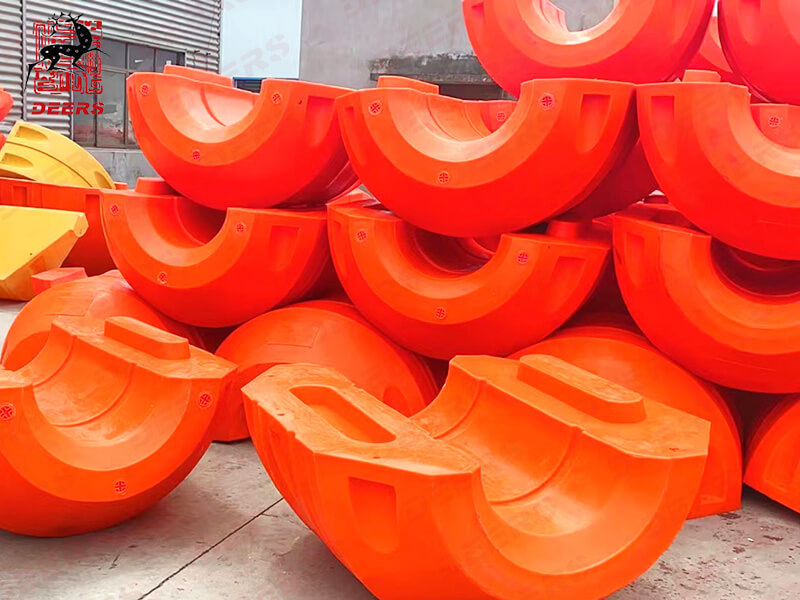
Pipe floats provide enough buoyancy to keep the pipeline at the required floating level.  They normally consist of two polyethylene half-shells installed around the pipeline. The two halves are bolted together around the pipe.

Pipe floats can be installed at calculated intervals along the pipe according to:

  • Pipe diameter
  • Pipe weight
  • Slurry density
  • Flange weight
  • Required freeboard
  • Environmental conditions
pipe floats - nanjing deers 3

8. Steel Dredging Pipes

Steel pipe provides high structural strength and is often used where greater rigidity or higher mechanical strength is required.
 
Common applications include:
 
  • Dredger onboard pipelines
  • Pump discharge lines
  • Shore pipelines
  • Submerged pipelines
  • High-pressure sections
  • Sections exposed to high mechanical loads

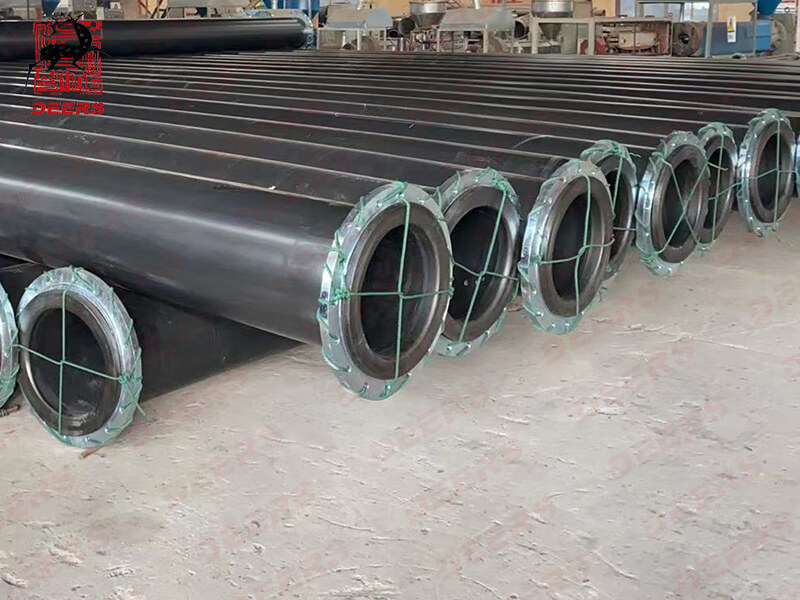
9. HDPE Dredging Pipes

HDPE pipes are widely used in modern dredging pipeline systems. Compared with steel pipe, HDPE offers several useful characteristics for marine applications, including corrosion resistance and relatively high flexibility. HDPE pipe systems can be used for floating, submerged or land-based pipeline sections depending on the pipeline design.

HDPE dredging pipes offer:

  • No seawater corrosion
  • Relatively low weight
  • Smooth internal surface
  • Good flexibility
  • Long continuous pipeline sections
UHMW-PE pipes-3
A Complete Dredging Pipeline Is a System, Not a Single Product
 
A reliable dredging pipeline is created by selecting the right component for each section of the slurry transportation route.
Pipeline diameter, slurry characteristics, working pressure, discharge distance, dredger movement, water depth and environmental conditions all influence the final configuration.
 
A properly designed dredging pipeline system can improve slurry transportation efficiency, simplify pipeline handling and reduce unnecessary wear throughout the dredging operation.
Prev: