

How to Check the Quality of EVA Foam-filled Fenders
Date:2026-11-04
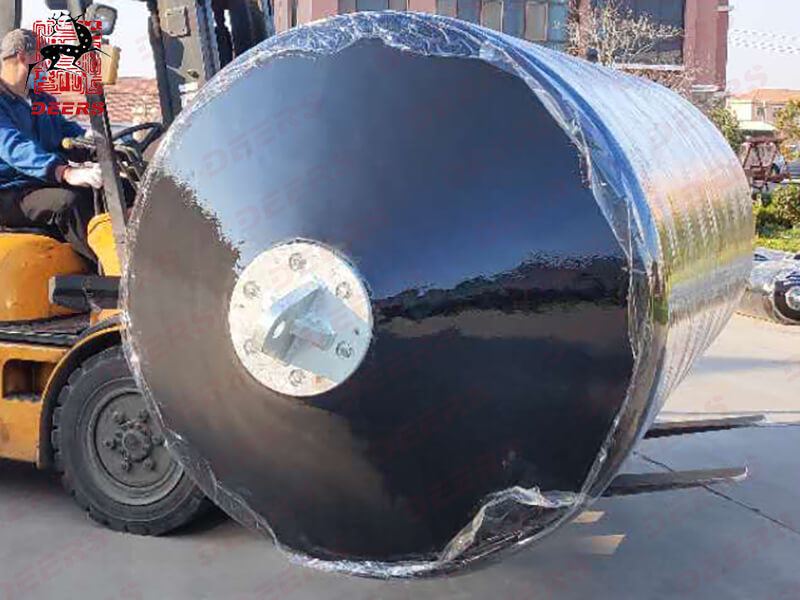
EVA foam-filled fenders are widely used in ports, terminals, and ship-to-ship (STS) operations to protect vessels and structures during berthing. They absorb impact energy through the compression of their internal closed-cell foam core.
Although foam-filled fenders from different manufacturers may look similar, differences in materials, construction, and manufacturing quality can significantly affect their performance and service life.
So, how can buyers identify a high-quality EVA foam-filled fender? Here are five important factors to check before purchasing.
1. Check the Internal EVA Foam Core
The foam core is the main energy-absorbing component of a foam-filled fender. Its density, cell structure, compression properties, and water absorption resistance are essential to overall performance.
High-quality foam-filled fenders use closed-cell foam materials with consistent properties and a uniform internal structure.
When inspecting the foam core, pay attention to the following:
- Material quality: Confirm the type and source of the foam material. Avoid materials with unknown origins or inconsistent properties.
- Cell structure: The foam should have a uniform structure without large voids, cracks, or loose areas.
- Foam density: The appropriate density depends on the fender’s design requirements. Higher density does not necessarily mean better performance.
- Compression recovery: The foam should recover effectively after compression without excessive permanent deformation.

For demanding projects, buyers can request foam samples and relevant test reports to verify material density, compression properties, and water absorption.
2. Inspect the Polyurethane Skin and Reinforcement Layers
The outer skin protects the foam core from abrasion, mechanical damage, and harsh marine conditions.
Marine foam-filled fenders commonly use a polyurethane elastomer skin reinforced with materials such as nylon fibers to improve tensile strength and tear resistance.
Several details should be checked:
- Surface quality: The outer skin should be smooth and continuous, without visible cracks, bubbles, pinholes, or delamination.
- Skin thickness: Thickness should meet the manufacturer’s design specifications, particularly around the fender ends and transition areas.
- Reinforcement layers: Verify that the required reinforcement materials are properly incorporated into the outer skin.
- Material properties: Check relevant test data, such as tensile strength, elongation, tear resistance, and abrasion resistance.
A thicker polyurethane skin does not automatically mean a better fender. Skin thickness, material flexibility, and reinforcement structure must work together to provide reliable protection.
3. Examine Manufacturing Quality and Construction Details
Manufacturing quality is another important factor affecting the durability and reliability of foam-filled fenders.
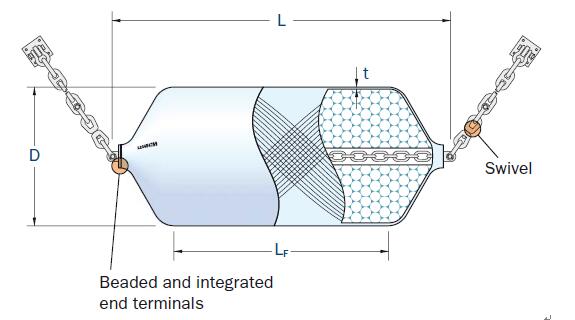
Many marine foam-filled fenders are manufactured using bonded or laminated closed-cell foam layers, followed by the application of reinforced protective skin.
Buyers should inspect the following details:
(1) Dimensions and Shape
Check the fender’s diameter, length, and end profiles against the approved technical drawings. For customized tapered fenders, the transition areas should be smooth and properly finished.
(2) Foam Core Bonding
For laminated foam cores, the individual foam layers should be securely bonded without visible separation, gaps, or other manufacturing defects.
(3) End Fittings and Connections
Inspect the lifting and connection arrangements, including metal fittings, attachment points, and corrosion protection. These components should be designed to withstand the required service loads.
(4) Protective Skin Coverage
Pay particular attention to the fender ends, connection areas, and customized profiles. The polyurethane skin should provide continuous and consistent coverage without obvious weak points.
4. Evaluate Performance Through Testing
Visual inspection alone cannot fully determine the quality of a foam-filled fender. Performance testing is necessary to verify its ability to protect vessels during berthing.
Important tests include:
| Test | What It Evaluates |
|---|---|
| Compression Recovery Test | Ability to recover after compression and resist permanent deformation |
| Water Absorption Test | Resistance of the foam material to water absorption under specified test conditions |
| Energy Absorption Test | Energy the fender can absorb at a specified compression |
| Reaction Force Test | Force generated by the fender during compression |
| Outer Skin Material Tests | Tensile strength, tear resistance, elongation, and abrasion resistance |
Among these, energy absorption and reaction force are two critical performance indicators.
A reliable fender must absorb sufficient berthing energy while keeping the reaction force within acceptable limits to reduce the risk of damage to vessels and supporting structures.
Therefore, buyers should not judge fender quality solely by pressing the surface by hand or observing how quickly it returns to its original shape.
Conclusion
Choosing a high-quality EVA foam-filled fender involves more than comparing appearance and price.
The internal foam core determines its fundamental compression characteristics, while the polyurethane skin and reinforcement layers contribute to durability and resistance to external damage. Manufacturing quality, structural details, and performance testing are equally important.
For buyers, the most reliable approach is to evaluate material quality, manufacturing workmanship, and performance test results together.
By checking these five factors, buyers can make more informed purchasing decisions and select foam-filled fenders that meet their project’s berthing requirements and long-term operational needs.
Therefore, buyers should not judge fender quality solely by pressing the surface by hand or observing how quickly it returns to its original shape.
Next: Three 1500KN Mooring Bollards Successfully installed at a wharf in jiangxi
RELATED
- ID850mm Discharge Hoses Ready for Shipment to Spain
- Three 1500KN Mooring Bollards Successfully installed at a wharf in jiangxi
- 1 x 6m Marine Airbags Shipped to Turkey Successfully
- When Should Anchor Chains be Replaced?
- 50 sets of Donut-Shaped Pipe Floats Shipped to Croatia
- Customized V Type Fenders Successfully installed for Berth Replacement Project in Nantong
- ID650 floating hoses Ready for Shipment to Australia
- 150T T-Head Bollards Ready for Delivery to Shandong, China