

How to Evaluate Rubber Fender Quality: Tests & Standards
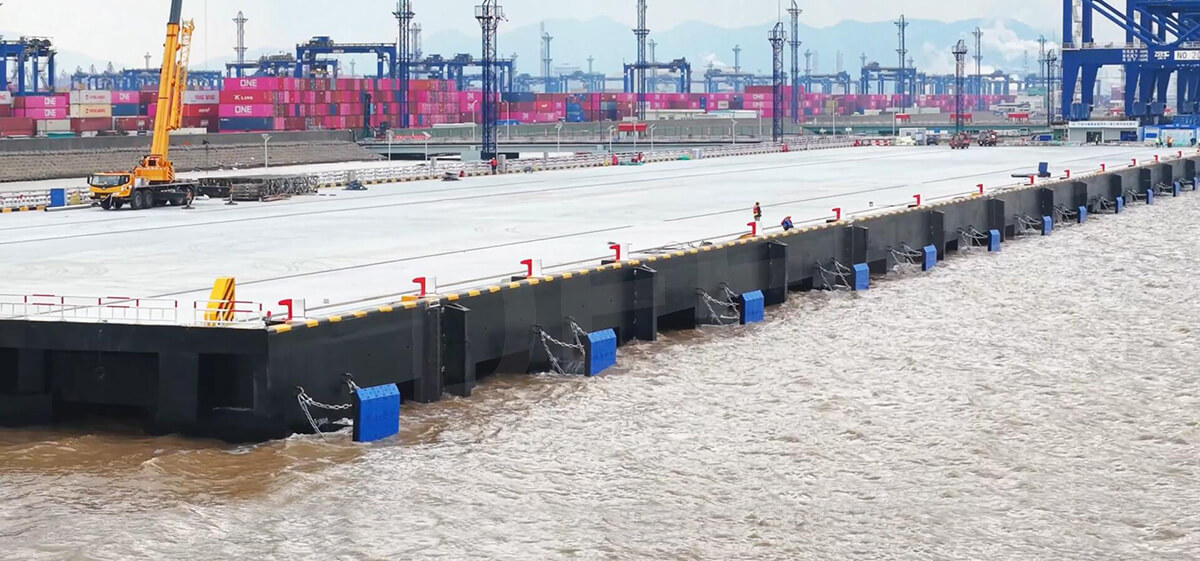
Rubber fenders are essential protective equipment for ports, terminals, and other marine facilities. Their primary function is to absorb berthing energy and reduce the risk of damage to vessels and port structures during berthing operations.
High-quality rubber fenders are designed to provide reliable energy absorption, stable performance, and long service life. In contrast, poor-quality fenders may suffer from premature aging, cracking, permanent deformation, or insufficient energy absorption, resulting in higher maintenance costs and potential safety risks.
Therefore, rubber fender quality should not be judged solely by appearance, weight, or purchase price. A reliable quality assessment should include physical property testing, chemical composition analysis, and finished fender performance testing.
Table of Contents
Physical Property Testing
Physical property testing is an important method for evaluating the quality of rubber compounds used in marine fenders. By measuring properties such as density, hardness, tensile strength, and elongation at break, manufacturers and buyers can determine whether the rubber material meets the specified technical requirements.
Density
Density refers to the mass of rubber per unit volume, usually expressed in g/cm³. Rubber density is influenced by the type of polymer, filler content, and overall compound formulation. Some low-cost rubber compounds may contain excessive amounts of high-density inorganic fillers, increasing the overall density of the material.
However, lower density does not necessarily indicate better rubber quality. Different rubber formulations have different acceptable density ranges. Density should therefore be evaluated together with other physical properties and the specified material requirements.
Hardness

Hardness measures the resistance of rubber to indentation and is commonly determined using a Shore A durometer. It is one of the material properties that influence the compression behavior of rubber fenders. Rubber that is too hard or too soft may cause the finished fender to perform differently from its intended design. Therefore, hardness should meet the specified requirements rather than simply being as high as possible.
Tensile Strength

Tensile strength indicates the maximum tensile stress a rubber material can withstand before failure. Adequate tensile strength helps rubber withstand mechanical stresses during service and reduces the risk of material failure. If the tensile strength is significantly below the specified requirement, it may indicate problems with the rubber compound or manufacturing process.
Elongation at Break
Elongation at break measures how much a rubber specimen can stretch before breaking, expressed as a percentage of its original gauge length. This property helps evaluate the rubber material's ability to withstand tensile deformation. Since rubber fenders undergo considerable deformation during vessel berthing, their rubber compounds must have sufficient elongation properties to reduce the risk of premature cracking.
Common Physical Testing Standards
| Test Item | Testing Equipment | Reference Standard |
|---|---|---|
| Density | Density measurement apparatus | ISO 2781 |
| Hardness | Shore A durometer | ASTM D2240 |
| Tensile Strength | Universal testing machine | ASTM D412 |
| Elongation at Break | Universal testing machine | ASTM D412 |
These tests provide valuable information about the rubber compound. However, the results must be compared with the applicable product specifications and acceptance criteria. No single physical property can independently determine the overall quality of a rubber fender.
Chemical Composition Analysis
In addition to physical properties, the chemical composition of rubber compounds plays an important role in determining fender quality. Rubber fenders are generally manufactured using a combination of rubber polymers, carbon black, fillers, curing agents, and other additives. The types and proportions of these ingredients influence the material's mechanical properties, processing characteristics, and durability. Chemical analysis helps buyers understand the composition of the rubber compound and verify whether it complies with the agreed material specifications.
Rubber Polymer Content
Rubber polymers are the primary elastic components of rubber compounds. Depending on the application and technical requirements, marine fenders may be manufactured using natural rubber, synthetic rubber, or a combination of both. Some low-cost rubber formulations may contain higher proportions of reclaimed rubber or alternative materials.
However, total polymer content should not be confused with the proportion of virgin natural rubber. Thermogravimetric analysis (TGA) can provide information about the composition of a rubber compound, but it cannot independently determine the exact proportion of virgin and reclaimed rubber. Additional analytical methods and raw material documentation may be required for a more detailed assessment.
Carbon Black Content
Carbon black is widely used as a reinforcing filler in rubber manufacturing. When properly selected and dispersed, carbon black can improve mechanical strength, abrasion resistance, and other rubber properties. However, a higher carbon black content does not automatically mean better quality. Excessive carbon black or poor dispersion may negatively affect processing and mechanical properties. Therefore, its content should be consistent with a validated rubber formulation and the relevant technical requirements.
Ash Content
Ash content refers to the inorganic residue remaining after a rubber sample has been treated under specified conditions. Ash analysis can provide useful information about inorganic materials present in the rubber compound. However, ash content alone cannot identify every filler or determine whether low-quality materials have been used. It should be interpreted alongside other chemical and physical test results.
Calcium Carbonate Content
Calcium carbonate is a commonly used inorganic filler in rubber compounds. It can serve useful functions in certain formulations. However, excessive use of fillers primarily to reduce production costs may negatively affect the mechanical properties of the rubber. For this reason, calcium carbonate content should be evaluated in relation to the rubber formulation, physical properties, and final product performance.
Common Chemical Analysis Methods
| Analysis Item | Testing Method | Reference Standard |
|---|---|---|
| Rubber Polymers and Organic Components | TGA, FTIR, and other applicable methods | ASTM D6370, ASTM D297 |
| Carbon Black Content | Thermogravimetric Analysis (TGA) | ASTM D6370 |
| Ash Content | Ash Analysis, TGA | ASTM D297, ASTM D6370 |
| Calcium Carbonate and Other Inorganic Fillers | Chemical Analysis and other applicable methods | ASTM D297 and other relevant methods |
Note: Different analytical methods have different limitations. Rubber compounds containing thermally decomposable fillers may require additional corrections or complementary analysis. These standards describe testing methods rather than universal acceptance limits for rubber formulations.
Finished Fender Performance Testing

Although physical and chemical tests help evaluate rubber compound quality, acceptable material properties do not necessarily guarantee that a finished rubber fender will meet its performance requirements. For marine fenders such as Cell Fenders, Cone Fenders, and Arch Fenders, finished product testing is essential to verify their actual performance. Compression testing is one of the most important methods for evaluating rubber fenders.
Energy Absorption
Energy absorption is a key performance indicator of a marine fender. It represents the amount of energy a fender can absorb during compression. A rubber fender must provide sufficient energy absorption capacity to meet the design requirements of the intended berthing conditions. If its actual energy absorption is lower than specified, the fender may not provide adequate protection during vessel berthing.
Reaction Force
Reaction force is the resisting force generated when a rubber fender is compressed. While sufficient energy absorption is necessary, reaction force must also remain within the specified limits. Excessive reaction forces may impose undesirable loads on the vessel hull or supporting port structures. Therefore, both energy absorption and reaction force must be considered when evaluating rubber fender performance.
Compression Testing
Compression testing simulates the deformation of a rubber fender under an applied load. During testing, the relationship between compression displacement and reaction force is measured. The corresponding energy absorption can then be calculated. The results help verify whether the finished fender meets the specified energy absorption and reaction force requirements.
For applicable marine fender systems, performance testing may be conducted in accordance with the relevant recommendations of PIANC Guidelines for the Design of Fender Systems and the project's technical specifications. Testing conditions, sampling requirements, and acceptance criteria should be clearly defined before inspection.
How to Identify Poor-Quality Rubber Fenders
It is difficult to evaluate rubber fender quality based on a single test result. For example, two rubber compounds may have similar polymer contents but significantly different mechanical properties due to differences in polymer types, filler composition, curing processes, and manufacturing quality.
When evaluating rubber fenders, the following findings may indicate potential quality concerns:
- Tensile strength significantly below the specified requirements.
- Insufficient elongation at break.
- Density values that differ significantly from the approved rubber formulation.
- Chemical composition inconsistent with the agreed material specifications.
- Finished fender energy absorption or reaction force outside the specified limits.
These findings should be evaluated together rather than independently. For example, higher rubber density does not automatically prove excessive reclaimed rubber content. Similarly, a higher polymer content does not necessarily guarantee superior performance.
A comprehensive assessment should confirm that the rubber composition, physical properties, and finished fender performance all meet the applicable technical requirements.
What Should Buyers Consider When Selecting Rubber Fenders?
Choosing a reliable rubber fender supplier is just as important as evaluating the product itself. Before placing an order, buyers should consider the following factors:
- Raw Material Quality Control — Does the manufacturer conduct appropriate inspections and quality control procedures for rubber raw materials and compounds?
- Material Testing Reports — Can the supplier provide physical property test results and chemical analysis reports that correspond to the project requirements?
- Finished Fender Performance Testing — Does the manufacturer have the necessary testing capabilities to verify energy absorption and reaction force?
- Manufacturing Quality Control — Does the supplier maintain consistent production processes, inspection procedures, and product traceability?
- Third-Party Inspection — Can the manufacturer support independent inspections or witnessed performance tests when required by the project?
A reliable supplier should be able to demonstrate appropriate quality control throughout the manufacturing process, from raw material selection to finished product inspection.
- Quality matters beyond price. The quality of rubber fenders plays an important role in protecting vessels and port infrastructure during berthing operations. When purchasing marine fenders, buyers should consider not only the initial purchase price but also product performance, expected service life, and long-term maintenance costs.
- Test comprehensively. Physical property testing, chemical composition analysis, and finished fender performance testing together provide a complete approach to evaluating rubber fender quality.
- Choose a reliable manufacturer. By selecting a manufacturer with reliable production capabilities, effective quality control procedures, and appropriate testing facilities, buyers can reduce procurement risks and ensure that the supplied fenders meet their project requirements.