Key Factors that determine the service life of marine rubber fenders
Date:2026-07-29
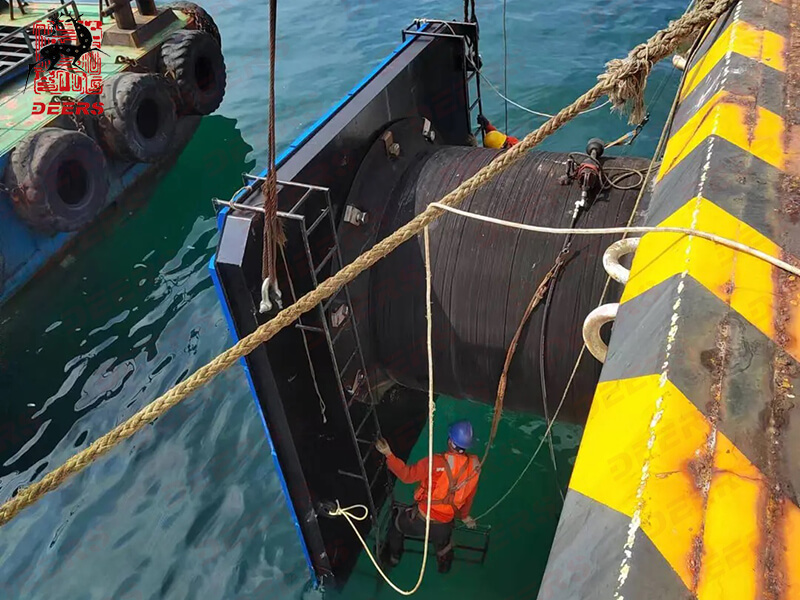
Marine rubber fenders are critical safety components used in ports, terminals, offshore platforms, and marine facilities to protect both vessels and structures during berthing operations.
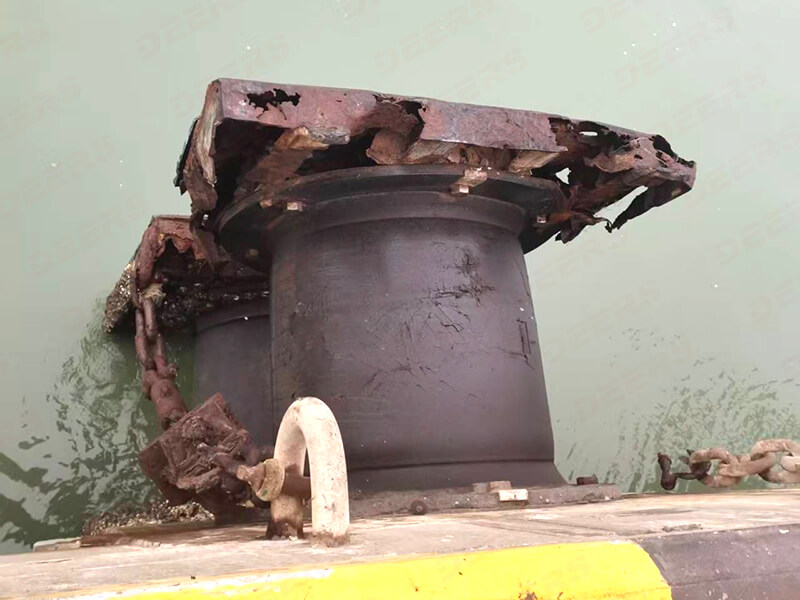
However, the service life of rubber fenders can vary significantly. Some fenders can remain in good condition for more than 10 years, while others may experience cracking, hardening, or performance loss after only a few years.
The difference is usually not only related to the appearance of the fender but also depends on factors such as rubber quality, operating environment, loading conditions, design selection, and installation.
Understanding these factors can help terminal operators and marine engineers choose the right fender system and maximize their investment.
1. Rubber Compound Quality
The quality of the rubber compound is one of the most important factors affecting marine fender durability.
Although rubber fenders from different manufacturers may look almost identical externally, their internal rubber formulations can vary greatly.
High-quality marine rubber compounds are specially developed to withstand harsh marine environments and provide:
- Excellent abrasion resistance
- Strong seawater resistance
- Superior UV resistance
- Better ozone resistance
- Stable elasticity after repeated compression
- Long-term mechanical performance
Since marine fenders are continuously exposed to seawater, sunlight, and mechanical loading, the rubber formulation directly determines how well the fender performs over time.
High-quality rubber compound is therefore the foundation of a durable marine fender.
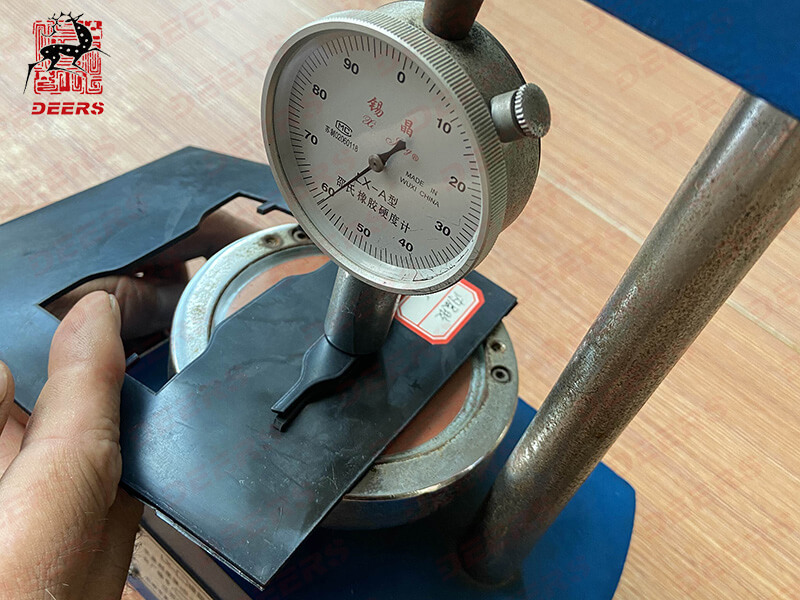
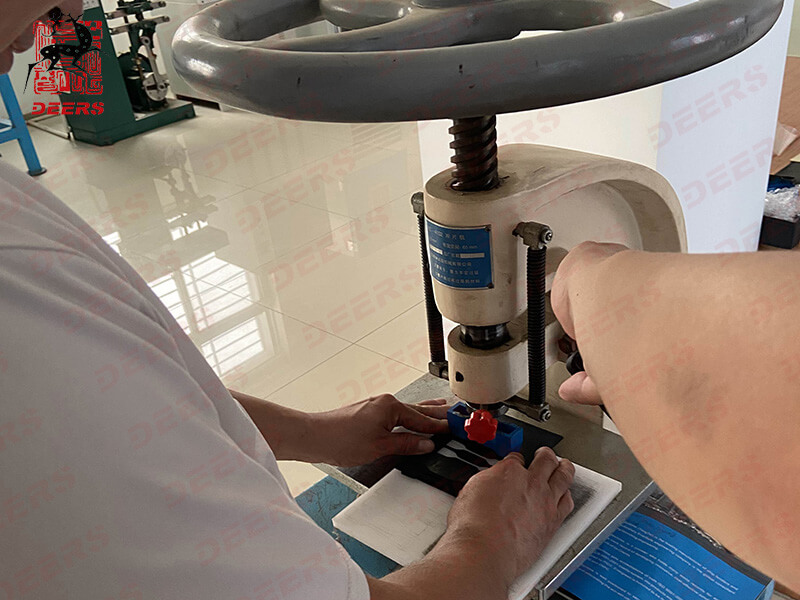
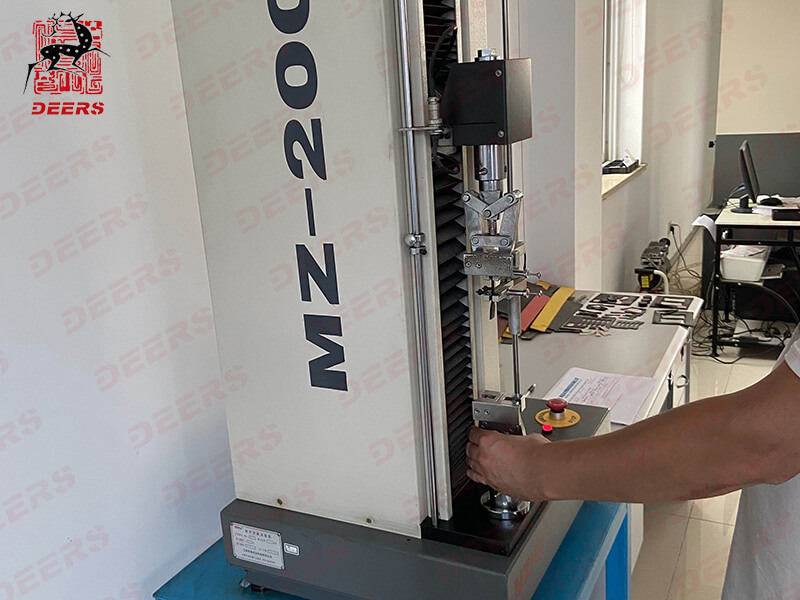
Rubber Material Performance Inspection👇
2. Marine Environmental Conditions
Marine environments are among the most challenging conditions for rubber products.
Unlike indoor rubber applications, marine fenders must withstand continuous exposure to seawater, sunlight, salt spray, and changing weather conditions.
- Seawater Exposure
Long-term contact with seawater may gradually affect rubber properties, especially when the material has insufficient chemical resistance.
Poor-quality rubber may lose flexibility and strength after years of exposure.
- Temperature Variation
Marine facilities often experience significant temperature changes between day and night or different seasons.
Repeated expansion and contraction may affect rubber performance over time.
- UV Radiation
Most marine fenders are installed outdoors and exposed to sunlight throughout their service life.
Continuous UV radiation can accelerate rubber aging, causing:
- Surface cracks
- Hardening
- Reduced flexibility
High-quality marine rubber compounds include anti-aging properties to improve resistance against UV degradation.
- Offshore and Extreme Conditions
Fenders installed at offshore platforms, exposed terminals, or open-sea facilities may face:
- Strong waves
- High humidity
- Salt spray
- Severe weather conditions
For these applications, the fender material and design must be selected according to the actual operating environment.
3. Berthing Frequency and Impact Energy
Marine fenders are designed to absorb vessel impact energy during berthing. However, repeated compression and recovery cycles will gradually affect rubber fatigue performance.
The actual service life depends on several operational factors:
- Vessel size and displacement
- Berthing velocity
- Frequency of vessel arrivals
- Required energy absorption capacity
- Daily loading cycles
High-traffic ports usually require fender systems with:
- Higher energy absorption capability
- Better fatigue resistance
- Proper deformation control
- Professional engineering calculation
Selecting a fender based only on vessel size without considering berthing frequency may result in premature failure.
4. Correct Fender Selection and Engineering Design
Choosing the wrong fender type or size is another major reason for reduced service life.
A marine fender system should be selected according to actual project requirements, including:
- Vessel displacement
- Berthing energy
- Maximum allowable reaction force
- Vessel contact area
- Quay structure strength
- Environmental conditions
If the selected fender capacity is too low:
- The fender may be excessively compressed
- Rubber fatigue may occur faster
- Internal damage may develop
- The quay structure may experience excessive loads
On the other hand, selecting an oversized fender can also create problems:
- Higher investment cost
- Inefficient energy absorption performance
- Increased installation requirements
Professional engineering analysis is essential to ensure the fender system matches the real operating conditions.
5. Installation Quality and Maintenance
Even a high-quality rubber fender may fail earlier than expected if installation is incorrect.
Proper installation should ensure:
- Correct mounting position
- Proper bolt tightening torque
- Suitable chains, brackets, and accessories
- Correct alignment with vessel contact areas
Incorrect installation can cause:
- Uneven loading
- Excessive local stress
- Abnormal rubber wear
- Damage to mounting components
Even a high-quality rubber fender may fail earlier than expected if installation is incorrect.
Proper installation should ensure:
- Correct mounting position
- Proper bolt tightening torque
- Suitable chains, brackets, and accessories
- Correct alignment with vessel contact areas
A complete marine fender system includes not only the rubber body but also proper accessories, installation methods, and maintenance procedures.
Next: Supply DD Rubber Fenders for Zhenjiang Sightseeing Wharf Project
RELATED
- Supply DD Rubber Fenders for Zhenjiang Sightseeing Wharf Project
- New ID500 Discharge Hoses for Western European Client
- Expansion Joints – Enhancing the Reliability of Dredging Pipeline Systems
- New Batch of 1.7 × 3m Pneumatic Fenders to Mexico
- Why do pneumatic fenders from different suppliers have such big price differences?
- 800H Cell Fender Systems for Fujian Port Fender Replacement Project
- Dock Rubber Fenders VS. Boat Rubber Fenders, which you need?
- Successfully Delivery of ID600 Discharge Hoses to Malaysia