

How to Prevent Mooring Bollard Damage and Mooring Line Snap-Back Accidents
Mooring bollard damage and snap-back accidents almost always trace back to three causes: mismatched mooring lines that load unevenly, mooring angles outside the bollard's design limits, and loads that exceed the bollard's safe working load.
This page explains how loads distribute across mooring lines, how vertical and horizontal angles affect bollard performance, what SWL really means, and the precautions that keep crew out of the snap-back zone.
1. Avoid Uneven Load Distribution Caused by Different Mooring Lines
Why Can Mixing Different Mooring Lines Be Dangerous?
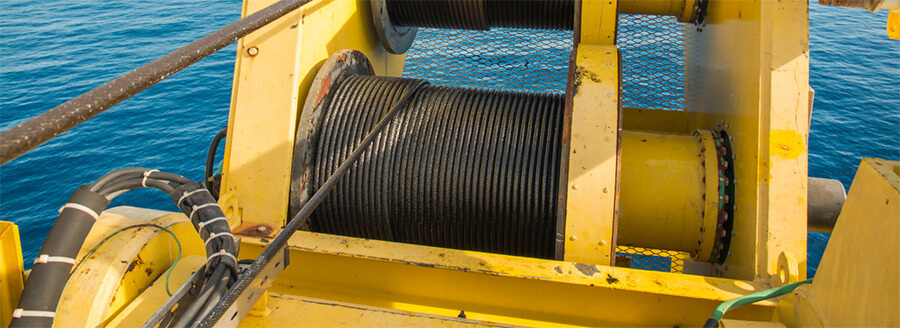
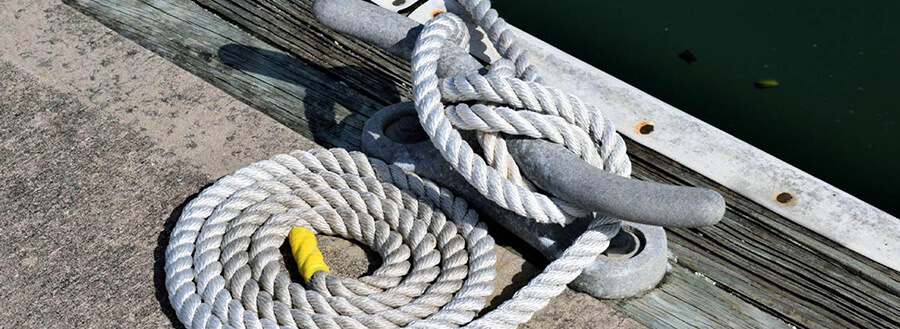
Mooring lines are manufactured from different materials, each with its own stiffness, strength, and elongation characteristics. For example, steel wire ropes generally have high axial stiffness and relatively low elongation under load. Synthetic fiber ropes, such as nylon ropes, typically offer greater elasticity and elongation.
When mooring lines with significantly different stiffness characteristics are used together to restrain a vessel in the same direction, the load may not be distributed evenly. In general, stiffer mooring lines may carry a greater proportion of the load, while more elastic lines may carry less. As a result, certain lines may become overloaded even when the overall mooring arrangement appears balanced.
If an overloaded line breaks, the load it previously carried may be redistributed among the remaining lines. This sudden increase in tension can cause additional failures, potentially resulting in a dangerous sequence of mooring line failures.
How to Reduce Uneven Mooring Line Loads
To improve load distribution and reduce the risk of mooring line failure, several measures should be considered:
- Use mooring lines with compatible characteristics. Lines serving the same mooring function should preferably have similar stiffness, strength, and length characteristics.
- Avoid inappropriate combinations. Mooring lines with substantially different mechanical properties should not be used together in the same functional group without proper assessment.
- Inspect mooring lines regularly. Check for wear, broken wires, cuts, abrasion, aging, and other signs of deterioration.
- Monitor and adjust line tension. Changes in tidal conditions, vessel draft, and environmental forces may require adjustments to maintain a suitable mooring arrangement.
It is important to note that combining steel wire ropes with synthetic fiber mooring tails is an established practice in certain mooring systems. Such arrangements are specifically designed to provide suitable elasticity and load characteristics and should not be confused with improper mixing of mooring lines.
2. Control Mooring Angles to Reduce Bollard Damage

A mooring bollard transfers line tension to the quay structure.
A mooring bollard is an essential component of a port's mooring system. It receives loads transmitted by mooring lines and transfers these forces to the quay structure through its anchoring system. The safety of a mooring bollard depends not only on the magnitude of the applied load but also on the direction in which the load acts.
The Effect of Vertical Mooring Angles
When a mooring line forms a vertical angle with the horizontal plane, its tension produces both horizontal and vertical force components. As the vertical angle increases, the vertical component of the line tension also increases. If the bollard and its anchoring system are not designed to accommodate the resulting forces, excessive vertical loads may increase the risk of damage to the bollard body, anchor bolts, or concrete foundation.
This issue is particularly important when a vessel has a relatively high freeboard, significant tidal variations occur at the berth, or there is a large height difference between the vessel's fairlead and the quay bollard. For these reasons, mooring arrangements should take into account vessel dimensions, freeboard, tidal variations, and the location of mooring bollards. The actual mooring line angles should remain within the allowable design conditions of the bollard and its supporting structure.

The Effect of Horizontal Mooring Angles
Different mooring lines serve different functions in controlling vessel movement.
- Breast lines primarily restrict the vessel's movement away from the berth, arranged as close as practicable to perpendicular to the quay.
- Spring lines primarily control the vessel's longitudinal movement along the berth, arranged as close as practicable to parallel to the quay.
- Head and stern lines help control vessel movement in both longitudinal and transverse directions, depending on their arrangement.
When mooring lines are positioned at unsuitable angles, their effectiveness in restraining movement in the intended direction may decrease. Improper angles can also produce unfavorable load directions on individual bollards. Therefore, the arrangement and number of mooring lines should be determined according to vessel characteristics, berth configuration, and expected environmental conditions.

3. Understand the Safe Working Load (SWL) of Mooring Bollards
Every mooring bollard should have a clearly defined rated load capacity, commonly expressed as its Safe Working Load (SWL). For example, a mooring bollard rated at 100 tonnes SWL is designed to withstand the specified working load under its defined design and operating conditions. However, this does not mean the bollard can safely withstand the same load from any direction or under any mooring arrangement. The actual load capacity must be considered in relation to the direction of the applied forces, the number of connected mooring lines, the bollard configuration, and the strength of its anchoring system.
What Happens When Multiple Lines Are Connected to One Bollard?
When multiple mooring lines are secured to the same bollard, the forces acting on the bollard depend on both the magnitude and direction of each line's tension. The combined loading must be evaluated rather than considering the tension in only one line. Simply adding the numerical tensions of all lines does not always represent the resultant force acting on the bollard. However, the individual forces and their directions must still be considered when assessing the loads on the bollard, its anchor bolts, and the supporting structure.
To ensure safe operation, terminal operators should:
- Ensure that the SWL marking on each bollard is clearly visible and accurate.
- Confirm the permitted mooring line arrangements and loading directions.
- Avoid exceeding the allowable loads of the bollard and its anchoring structure.
- Inspect bollards regularly for corrosion, cracks, deformation, and loose anchor bolts.
- Verify that the mooring arrangement is compatible with the berth's design and operating conditions.
For large vessels, complex berths, or severe environmental conditions, a detailed mooring analysis may be necessary to evaluate the loads acting on mooring lines and bollards.
Important
There is no universal rule requiring all mooring bollards to operate below 55% of their SWL. Acceptable loading should be determined according to the applicable design criteria, berth requirements, and equipment specifications.
4. Prevent Mooring Line Snap-Back Accidents
Mooring lines stretch when subjected to tension, storing elastic energy. If a mooring line breaks, a connection fails, or a tensioned line is suddenly released, this stored energy can be released rapidly. The resulting movement of the line or its components is known as snap-back.
Snap-back is one of the most serious hazards associated with mooring operations because a failed line can recoil at high speed and cause severe or fatal injuries to personnel nearby.
Essential Safety Precautions During Mooring Operations
Stay Clear of Dangerous Mooring Areas
Mooring areas should be treated as potentially hazardous whenever lines are under tension. Personnel should remain in safe positions determined through appropriate risk assessments and avoid standing close to tensioned lines, inside rope bights, or in other areas where they may be struck by a recoiling line. It is important to recognize that snap-back trajectories are not always predictable. Personnel should not assume that areas outside a traditionally marked snap-back zone are automatically safe.
Never Handle Mooring Lines Under Excessive Tension
Personnel should never attempt to adjust a highly tensioned mooring line directly with their hands or feet. If a line becomes trapped, tangled, or improperly positioned, the situation should be assessed and the tension safely controlled before corrective action is taken. Uncontrolled handling of loaded mooring lines can result in serious injuries.
Inspect Mooring Equipment Before Operation
Mooring equipment should be inspected before use to identify potential defects or unsafe conditions. Particular attention should be given to:
- Mooring lines showing excessive wear or damage.
- Damaged or improperly functioning fairleads and rollers.
- Cracked, corroded, or deformed mooring bollards.
- Loose or damaged bollard anchor bolts.
- Other defects that may affect the safety of mooring operations.
If a serious defect is identified, the affected equipment should not be used until it has been properly assessed and the necessary corrective measures have been completed.
Can Automated Mooring Equipment Improve Safety?
For terminals with suitable infrastructure, remotely operated quick release hooks (QRH) and automated mooring systems may help reduce personnel exposure to hazardous areas. These systems can allow certain mooring operations to be performed with less direct interaction between personnel and tensioned mooring lines. However, automated equipment must still be operated within its design limits and according to established procedures. Regular inspections, personnel training, and appropriate risk assessments remain essential.
Safety Tips
- Select mooring lines properly. Match stiffness, strength and length within each functional group.
- Keep mooring angles within design limits. Respect the bollard's allowable vertical and horizontal loading directions.
- Load bollards correctly. Stay within the rated SWL and evaluate combined loads from multiple lines.
- Inspect equipment regularly. Check lines, fairleads, rollers and bollards for wear, cracks and loose bolts.
- Stay out of the snap-back zone. Never handle a tensioned line, and treat unmarked areas as potentially hazardous.
By understanding how mooring forces act on lines and bollards, operators can reduce the likelihood of equipment damage, mooring line failures, and dangerous snap-back accidents.
Frequently Asked Questions
Do steel wire and synthetic rope always have to be kept separate?
No. Steel wire rope with a synthetic fiber tail is an established arrangement in certain mooring systems, because the tail adds controlled elasticity. The problem is not the combination itself but mixing lines of very different stiffness within the same functional group without assessing how the load will be shared.
How do I know if a bollard is overloaded?
Load direction, the number of connected lines and the condition of the anchoring system all matter, not just the total tension. If a bollard shows corrosion, cracking, deformation or loose anchor bolts, or if a line angle exceeds the bollard's design conditions, treat it as suspect and assess it before loading further.
Is there a fixed percentage of SWL a bollard should stay under?
There is no universal rule such as 55% of SWL. Acceptable loading is determined by the applicable design criteria, berth requirements and equipment specifications for the specific bollard and its anchoring system.
What is the most dangerous part of a mooring operation?
Snap-back is the most serious hazard. A tensioned line that fails stores elastic energy and recoils at high speed along a trajectory that is not always predictable, which is why personnel should stay clear of bights and tensioned lines and never handle a loaded line by hand.
Can automated mooring equipment remove the risk?
Automated systems and quick release hooks reduce personnel exposure, but they do not remove the risk. They must be operated within design limits and according to procedures, and inspection, training and risk assessment remain essential.