

What Affects Marine Rubber Fender Prices? 8 Key Cost Factors Explained
A marine fender's price is driven by far more than its outside dimensions. Raw materials and formulation, structural design and weight, performance and operating requirements, manufacturing and customization, quality testing and certification, accessories and scope of supply, order quantity and technical services, plus raw-material market swings and freight all shape the final quotation.
This page explains the eight key cost factors and how to compare supplier quotes on a genuinely like-for-like basis.
1. Fender Types and Raw Materials
Different types of marine fenders use different materials and structural designs, resulting in different manufacturing cost structures.
Solid Rubber Fenders
Common types of solid rubber fenders include Cell Fenders, Cone Fenders, Arch Fenders, Cylindrical Fenders, D Fenders, W Fenders, M Fenders, Keyhole Fenders, and Sausage Fenders. They are widely used in ports, terminals, shipyards, tugboats, and other vessels for impact protection.
The primary material used in these fenders is a rubber compound, typically consisting of natural rubber, synthetic rubber, carbon black, anti-aging agents, and other rubber additives.
The quality, purchase price, and proportions of these raw materials directly affect the cost of the rubber compound.
Some manufacturers may reduce production costs by increasing the proportion of reclaimed rubber or low-cost fillers. However, an unsuitable rubber formulation may negatively affect elasticity, abrasion resistance, tear resistance, and aging resistance.
Therefore, even two solid rubber fenders with identical dimensions and weights may have significantly different raw material costs.

The rubber compound — its quality, purchase price, and proportions of natural rubber, synthetic rubber, carbon black, and additives — directly drives the cost of solid rubber fenders.
Pneumatic Rubber Fenders
Pneumatic rubber fenders primarily consist of an outer rubber layer, reinforcing cord layers, an inner rubber layer, and compressed air.
Their material costs mainly depend on:
- The quality and thickness of the inner and outer rubber layers.
- The material and strength of the reinforcing cords.
- The bonding materials between rubber and reinforcing cords.
- The materials and quality of metal components, such as flanges and valves.
Different grades of rubber compounds and reinforcing cords have different material costs. Consequently, pneumatic fenders with the same diameter, length, and initial internal pressure may still have different manufacturing costs.
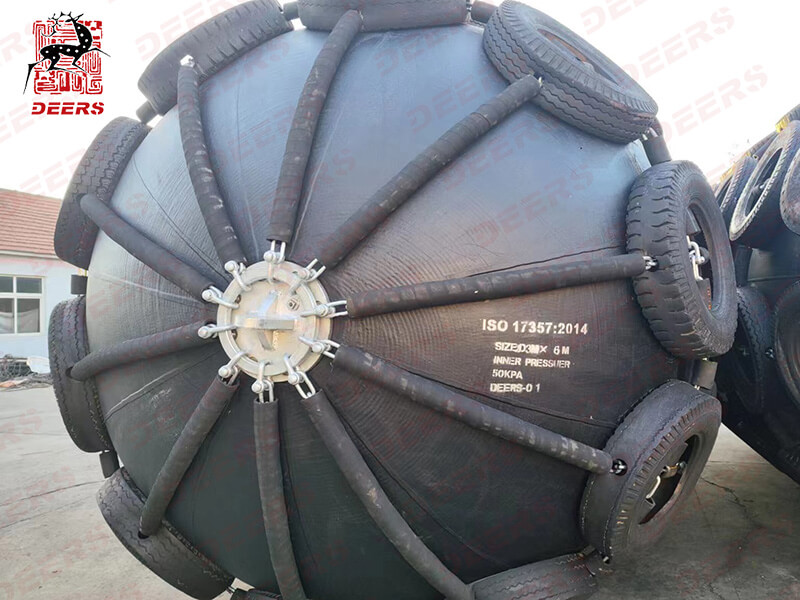
Material cost is set by the quality and thickness of the inner and outer rubber layers, the material and strength of the reinforcing cords, and the bonding between them.
Foam Filled Fenders
Foam filled fenders typically consist of a closed-cell foam core, fiber reinforcement, a polyurethane or polyurea protective outer skin, and end fittings.
Their material costs mainly depend on the type, density, and quality of the foam core, as well as the material, thickness, and reinforcement structure of the outer skin.
Proper selection and design of the foam core and protective outer skin are important for energy absorption, compression recovery, abrasion resistance, and tear resistance.
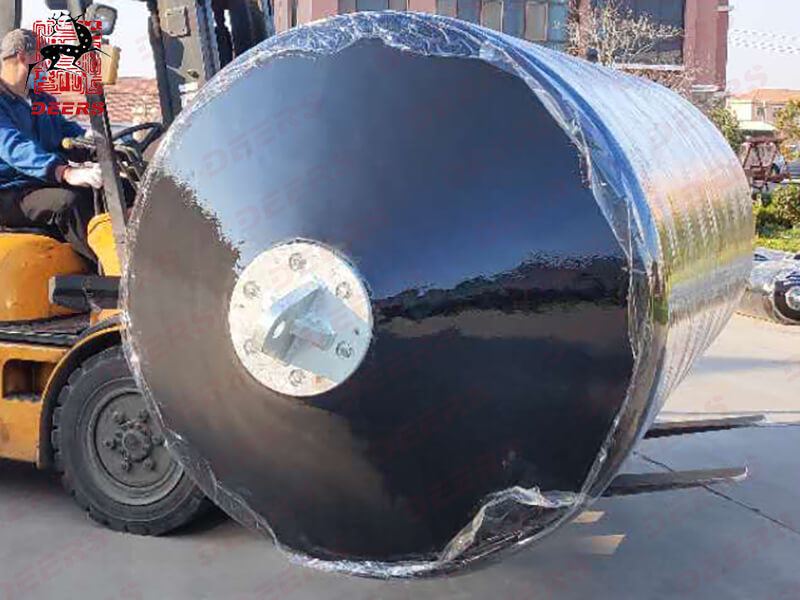
Cost depends on the type, density, and quality of the foam core, as well as the material, thickness, and reinforcement structure of the protective outer skin.
Key Point
Since different fender types have different material compositions and operating principles, comparing their prices based solely on external dimensions is not appropriate.
2. Dimensions, Weight, and Structural Design
Dimensions are among the most obvious factors affecting marine fender prices. Generally, larger fenders require more raw materials and may involve higher production and processing costs.
However, external dimensions alone do not fully reflect the actual amount of material used. Cross-sectional geometry, internal bore diameter, rubber wall thickness, and reinforcement structure also influence product weight and manufacturing costs.
For fender systems equipped with steel frontal panels and UHMW-PE facing pads, the dimensions, weight, and structural design of these components must also be considered when evaluating costs.
The table below summarizes the main cost-related parameters of different marine fender types.
| Fender Type | Main Parameters Affecting Material Consumption and Cost |
|---|---|
| Cell Fenders, Cone Fenders | Fender height, flange dimensions, rubber wall thickness, body geometry, steel frontal panel dimensions and weight, UHMW-PE facing pad area and thickness |
| Arch Fenders | Cross-sectional height, base width, rubber thickness, length, and dimensions of optional steel frontal panels and UHMW-PE facing pads |
| Cylindrical Fenders, Sausage Fenders | Outer diameter, inner diameter, and length |
| D Fenders | Cross-sectional height, width, internal bore diameter, length, and area and thickness of optional UHMW-PE facing pads |
| W Fenders, M Fenders, Keyhole Fenders | Cross-sectional dimensions, rubber thickness, cross-sectional geometry, and length |
| Pneumatic Fenders | Diameter, length, rubber layer thickness, and reinforcing cord structure |
| Foam Filled Fenders | Diameter, length, foam density, outer skin thickness, and reinforcement structure |
Note
Steel frontal panels and UHMW-PE facing pads are not standard components for every fender type. Their design and dimensions depend on project specifications and actual operating conditions.
For example, two cylindrical fenders or sausage fenders may have the same outer diameter and length. However, differences in their inner diameters can result in different rubber consumption, product weights, and compression performance.
Therefore, when comparing marine fender quotations, buyers should review not only the external dimensions but also technical drawings, product weight, internal structure, and the design parameters of associated frontal panels and facing pads.
Greater material consumption does not necessarily mean better fender performance. Proper structural design, material selection, and performance matching are more important.
3. Performance Requirements and Operating Conditions
The primary value of a marine fender lies in its protective performance rather than simply its appearance or dimensions.
Different vessel types, terminal designs, operating methods, and environmental conditions create different performance requirements. To meet these requirements, manufacturers may need to adjust rubber formulations, optimize structural designs, or use specialized materials, all of which can influence manufacturing costs.
| Performance Requirement | Main Application Requirement |
|---|---|
| Energy Absorption and Reaction Force | Meeting berthing energy requirements while controlling the forces acting on vessels and berth structures |
| Abrasion Resistance | Withstanding frequent contact, friction, and pushing operations |
| Tear Resistance | Reducing rubber damage caused by localized stress and demanding operating conditions |
| Aging Resistance | Maintaining material performance during long-term exposure to marine and outdoor environments |
| Low-Temperature Resistance | Maintaining suitable performance in cold-climate ports and vessel operations |
| Oil Resistance | Suitable for operating environments where exposure to oils may occur |
| Compression Recovery | Maintaining recovery performance after repeated compression and deformation |
For large container terminals and oil terminals, fenders must absorb the required berthing energy while keeping reaction forces within the allowable limits of the vessel hull and berth structure. Meeting these requirements involves appropriate structural design and rubber compound selection.
For tugboat fenders, abrasion resistance, tear resistance, and performance stability under repeated compression are particularly important because these fenders frequently experience pushing, compression, and friction during operations.
Fenders used in cold climates may require specialized low-temperature rubber formulations to minimize the effects of low temperatures on rubber elasticity and protective performance.
For pneumatic fenders, different initial internal pressures, such as 50 kPa and 80 kPa, result in different energy absorption and reaction force characteristics, even when the external dimensions are identical. They may also require different structural designs.
These performance and operating requirements can increase material, engineering, and manufacturing costs.
Therefore, buyers should determine the required performance characteristics according to actual operating conditions rather than simply pursuing the highest performance grade or the lowest purchase price.
4. Manufacturing Processes and Customization
Manufacturing processes are an important factor affecting marine fender costs, although differences in manufacturing quality are often difficult to identify through visual inspection alone.
Rubber fender production generally involves rubber compounding, forming, vulcanization, trimming, and secondary processing. Manufacturing equipment, mold accuracy, process control, labor input, and energy consumption all contribute to production costs.
In addition to standard manufacturing processes, customization is another important factor contributing to price differences.
For terminal construction, new shipbuilding, and fender replacement projects, fenders may need to be customized according to specific installation requirements.
Common Customization Requirements
- Non-standard cross-sectional dimensions and special lengths.
- Pre-curving or customized forming to match vessel hull geometry.
- Customized mounting holes and hole spacing.
- End cutting and special-angle machining.
- Development of molds for non-standard dimensions.
- Customized connection structures.
- Customized steel frontal panels and UHMW-PE facing pads.
- Special colors and company logos.
Standard fender specifications can generally be manufactured using existing molds and established production processes. Non-standard specifications, however, may require additional engineering, mold development, equipment adjustments, and manual processing.
Therefore, even when two fenders require similar amounts of material, differences in manufacturing processes and customization requirements can result in different production costs.
5. Quality Testing and Certification Requirements
Quality testing is essential for verifying whether marine fenders meet design requirements and technical specifications. It also represents a component of the overall product cost.
Depending on the fender type and project requirements, manufacturers may need to conduct different quality inspections and performance tests.
| Testing Category | Main Inspection and Testing Items |
|---|---|
| Visual and Dimensional Inspection | Surface quality, dimensions, mounting hole positions, etc. |
| Rubber Physical Property Testing | Hardness, tensile strength, elongation at break, etc. |
| Rubber Durability Testing | Abrasion resistance, aging resistance, tear resistance, etc. |
| Fender Performance Testing | Compression, energy absorption, reaction force, and recovery performance |
| Pneumatic Fender Testing | Air tightness, pressure testing, and relevant performance tests |
| Foam Filled Fender Testing | Water absorption and compression recovery |
| Steel Frontal Panel and Accessory Inspection | Dimensions, welding quality, protective coating thickness, and accessory load-bearing performance |
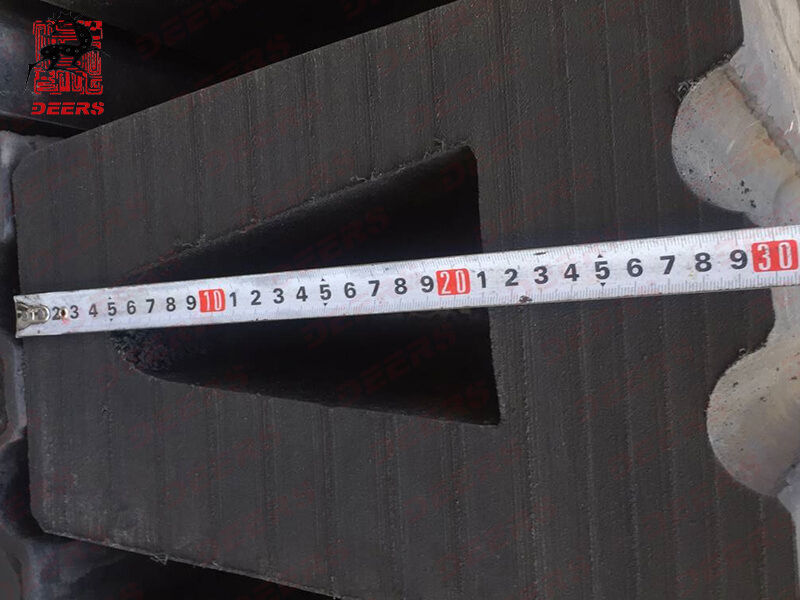
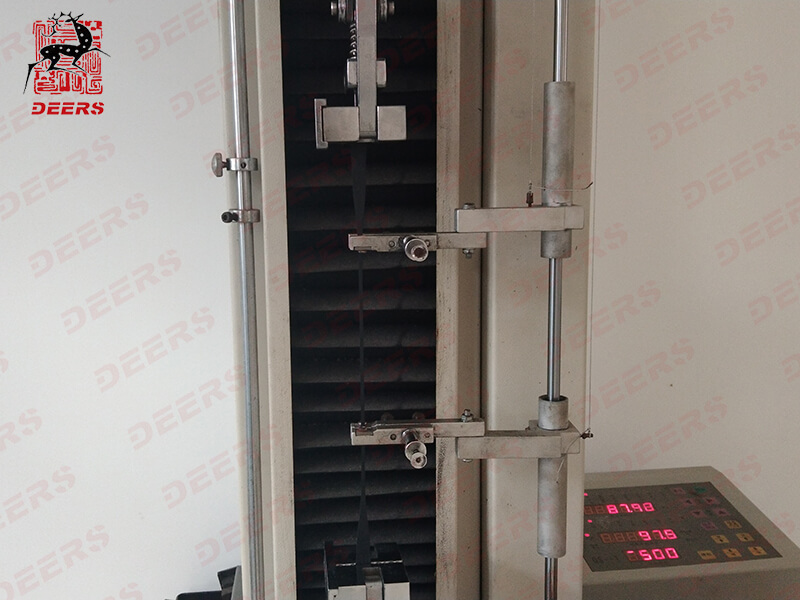

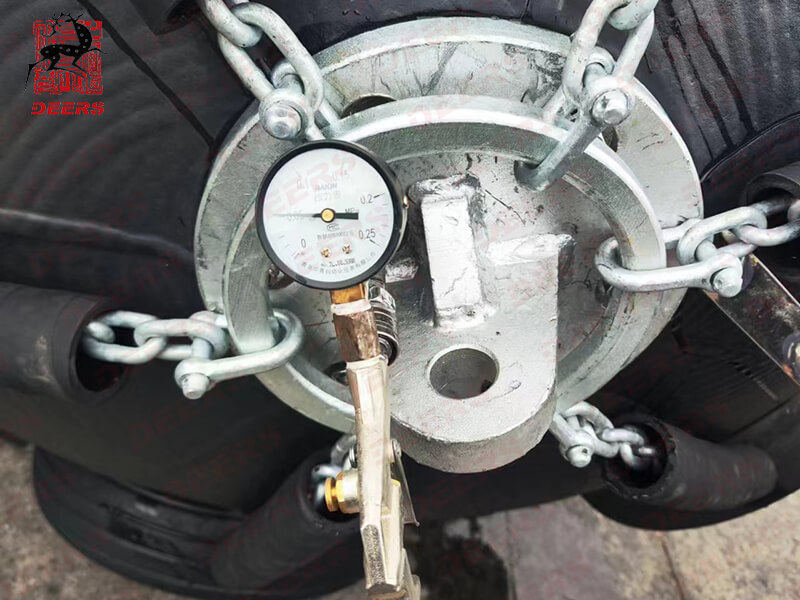
Different testing items, sampling rates, and acceptance criteria result in different inspection costs.
For example, routine factory inspections and specialized performance tests conducted according to customer specifications may differ significantly in equipment usage, testing duration, personnel requirements, and report preparation.
For certain large port construction, shipbuilding, and marine engineering projects, customers may also require witnessed inspections or relevant certificates from classification societies or third-party inspection organizations such as BV, ABS, CCS, and DNV.
Third-party inspections generally involve additional expenses associated with surveyor services, document reviews, witnessed testing, and certificate issuance.
Therefore, when comparing quotations, buyers should confirm whether the applicable standards, testing scope, sampling requirements, and certification requirements are consistent.
6. Accessories and Scope of Supply
During marine fender procurement, some suppliers may provide quotations covering only the fender body, while others may offer complete fender systems that include installation hardware and protective accessories.
Differences in the scope of supply can result in significant price variations.
The following table lists common accessories for different types of marine fenders.
| Fender Type | Common Accessories |
|---|---|
| Cell Fenders, Cone Fenders | Steel frontal panels, UHMW-PE facing pads, fixing bolts, chains, shackles, anchor assemblies, and chain connection fittings |
| Arch Fenders | Mounting bolts, washers, anchor assemblies, optional steel frontal panels, UHMW-PE facing pads, and fixing components |
| Cylindrical Fenders, Sausage Fenders | Fixing chains, steel bars, steel brackets, and other connection fittings, depending on the installation method |
| D Fenders | Mounting bolts, steel fixing components, and optional UHMW-PE facing pads |
| W Fenders, M Fenders, Keyhole Fenders | Mounting bolts and steel fixing components |
| Pneumatic Fenders | Chain and tire nets, chains, shackles, swivels, and rubber sleeves |
| Foam Filled Fenders | Chains, shackles, swivels, and optional protective nets |
Note
The accessories listed above are common configurations rather than standard components for every fender. The actual scope of supply depends on project design, installation methods, and customer requirements.

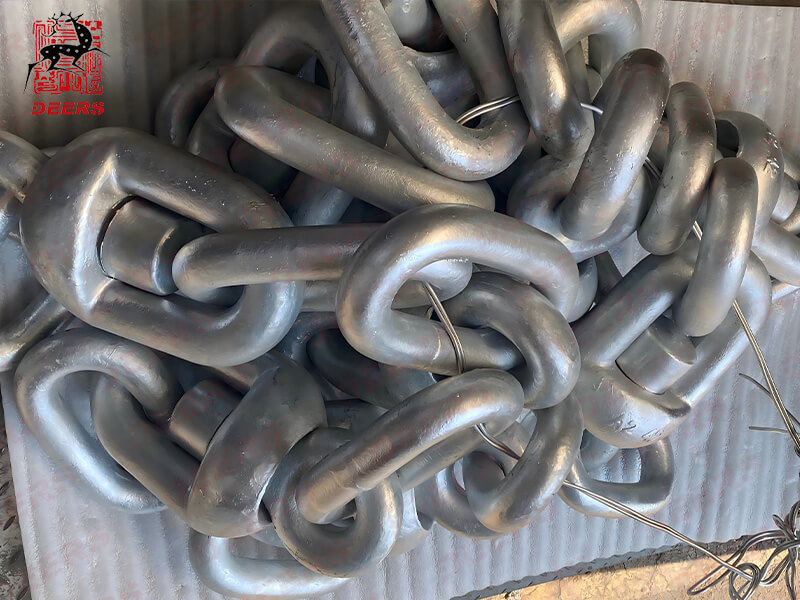
For example, when purchasing Cell Fenders or Cone Fenders, one supplier may quote only the rubber fender units, while another may provide a complete fender system consisting of rubber fenders, steel frontal panels, UHMW-PE facing pads, chains, and installation accessories.
Even if the rubber fenders offered by both suppliers have identical specifications and performance characteristics, their quotations may differ considerably.
Similarly, pneumatic fenders equipped with chain and tire nets generally have different overall costs from sling-type pneumatic fenders without protective nets, even when the fender bodies have identical specifications.
Furthermore, even when the types and quantities of accessories are the same, differences in material grades, corrosion protection treatments, and load-bearing capacities can affect the final quotation.
Buyers should therefore clarify whether a quotation covers only the fender body or a complete fender system. The specifications, materials, and quantities of all accessories should also be reviewed.
Quotations can only be meaningfully compared when the scope of supply is consistent or the cost differences have been properly accounted for.
7. Order Quantity and Technical Services
Order Quantity
Order quantity affects production planning and the manufacturing costs allocated to each fender.
For bulk orders involving identical specifications, production preparation, equipment setup, mold usage, and certain labor costs can be distributed across a larger number of products. Bulk production may also improve manufacturing efficiency.
In contrast, small orders or orders involving multiple specifications may require more frequent adjustments to equipment, molds, and production processes, potentially increasing unit manufacturing costs.
For customized fender projects requiring new molds, smaller order quantities generally result in higher mold development costs allocated to each product.
Therefore, even when purchasing identical fenders from the same manufacturer, different order quantities may result in different unit prices.
Technical Support and After-Sales Services
In addition to the products themselves, the technical services provided by different suppliers may vary.
These services may include fender selection, technical drawing confirmation, fender system design, installation recommendations, on-site installation guidance, and after-sales technical support.
For berth fender projects, technical services may involve berthing energy calculations, fender performance selection, frontal panel structural design, and accessory arrangement.
For ship fender projects, technical considerations include compatibility with vessel hull geometry, available installation space, and existing fixing systems.
Professional technical support can help reduce additional expenses and rework caused by improper fender selection, dimensional mismatches, unsuitable installation methods, or incorrect accessory configurations.
Providing these services requires technical expertise, time, and resources, which may also be reflected in the supplier's overall quotation.
8. Raw Material Market Fluctuations and Transportation Costs
Even when product specifications, order quantities, and the scope of supply are identical, orders placed at different times or delivered to different destinations may have different prices.
Raw Material Market Fluctuations
The market prices of natural rubber, synthetic rubber, carbon black, reinforcing cords, steel, foam materials, and polyurethane are constantly changing.
Raw material prices are influenced by various factors, including market supply and demand, energy costs, transportation costs, and international trade conditions.
When the prices of major raw materials fluctuate, marine fender manufacturing costs may change accordingly.
For berth fender projects involving large quantities of steel frontal panels and UHMW-PE facing pads, fluctuations in steel and polyethylene prices may also significantly influence the overall project quotation.
This is one of the reasons why manufacturers typically specify a quotation validity period and why identical fender specifications may receive different quotations at different times.
Packaging and Transportation
Marine fenders are often heavy, long, or bulky. Transportation costs are therefore influenced by product dimensions, weight, packaging methods, transportation distance, and available loading space.
Different types of marine fenders have different transportation cost considerations.
| Fender Type | Main Factors Affecting Transportation Costs |
|---|---|
| Solid Rubber Fenders | Product weight, external dimensions, length, and loading space |
| Pneumatic Rubber Fenders | Transportation condition, packaging method, and accessory configuration |
| Foam Filled Fenders | Product volume and container space utilization |
| Complete Berth Fender Systems | Fender bodies, frontal panel dimensions and weight, accessory quantities, and packing arrangements |
For example, large steel frontal panels used in Cell Fender and Cone Fender systems may occupy considerable shipping space. Depending on panel dimensions, some projects may require specialized transportation arrangements.
Some pneumatic fenders can be deflated and packed for transportation in accordance with the manufacturer's instructions, helping reduce shipping volume and logistics costs.
For international orders, packaging, inland transportation, port handling, ocean freight, and insurance may also be included in the final quotation, depending on the agreed delivery terms.
Therefore, buyers should confirm the applicable Incoterms, such as EXW, FOB, CFR, or CIF, when comparing supplier quotations to avoid directly comparing prices that include different transportation and delivery costs.
Tips: How to Compare Marine Fender Quotations Effectively
Before comparing marine fender quotations from different suppliers, buyers should confirm whether the following conditions are consistent.
- Product Specifications — Fender type, dimensions, cross-sectional geometry, and weight.
- Technical Requirements — Material properties, energy absorption, reaction force, and special operating requirements.
- Customization Requirements — Non-standard dimensions, mounting holes, special processing, and installation methods.
- Quality Requirements — Applicable standards, testing items, sampling rates, and third-party inspection requirements.
- Scope of Supply — Fender bodies, steel frontal panels, facing pads, installation hardware, and protective accessories.
- Procurement Conditions — Order quantity, delivery lead time, and quotation validity.
- Technical Services — Fender selection, engineering drawings, installation guidance, and after-sales support.
- Delivery Terms — Packaging methods, transportation costs, and Incoterms.
In addition to the initial purchase price, buyers should also consider the life cycle cost (LCC) of a marine fender system, which may include initial procurement costs, packaging and transportation costs, installation costs, routine inspection and maintenance costs, repair and replacement costs, and potential vessel repairs, berth repairs, and operational downtime resulting from fender failure.
A higher-priced fender is not necessarily the most suitable option, just as a lower-priced fender does not necessarily indicate inferior quality. Only by comparing products under equivalent technical requirements, quality standards, and supply conditions can buyers accurately determine whether a quotation is reasonable.
Selecting a marine fender system that matches the vessel type, berth structure, installation requirements, and actual operating conditions is the key to achieving a reasonable balance between procurement costs, protective performance, and long-term value.
Frequently Asked Questions
What factors affect the price of marine fenders?
Marine fender prices are influenced by several factors, including raw materials, dimensions, structural design, performance requirements, manufacturing processes, quality testing, accessories, order quantity, and transportation costs. Customization and third-party inspection requirements may also increase the overall cost.
Why do rubber fenders of the same size have different prices?
Rubber fenders with identical external dimensions may differ in rubber formulations, wall thickness, internal structures, material consumption, and performance characteristics. Differences in manufacturing processes and quality control can also affect production costs and final prices.
How do accessories affect the cost of a marine fender system?
Accessories such as steel frontal panels, UHMW-PE facing pads, chains, shackles, and mounting bolts can significantly influence the total cost of a marine fender system. Their dimensions, material grades, quantities, load-bearing capacities, and corrosion protection treatments should all be considered when comparing quotations.
Does a higher marine fender price mean better quality?
Not necessarily. A higher price may reflect specialized materials, higher performance requirements, customization, additional testing, or a more comprehensive scope of supply. Buyers should evaluate fender quality based on technical specifications, material properties, performance test results, and compliance with applicable standards rather than price alone.
How can I compare marine fender quotations from different suppliers?
To compare quotations accurately, buyers should ensure that the fender specifications, performance requirements, testing standards, accessories, order quantities, and delivery terms are consistent. In addition to the initial purchase price, maintenance, installation, repair, and replacement costs should also be considered to evaluate the overall life cycle cost.