

Why do Some Dredging Hoses Last Months While Others Last Years?
Dredging hose service life is not decided by rubber quality alone. The transported material, inner-lining and reinforcement design, slurry velocity, connection quality, and maintenance practices all combine to determine whether a hose lasts months or years.
This page explains the factors behind dredging hose durability, how to select the right hose, and how to extend service life through proper operation and maintenance.
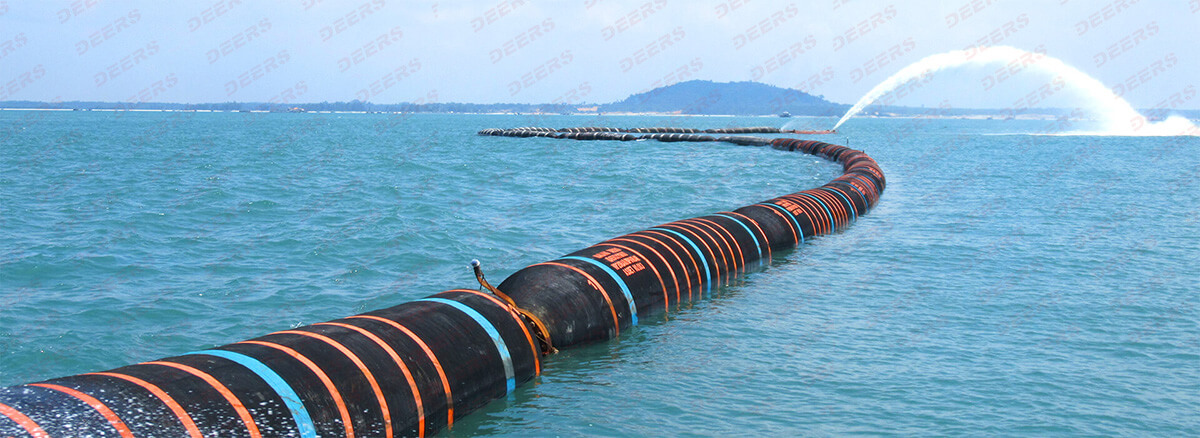
1. Wear-Resistant Inner Lining: A Key Factor in Hose Durability
During dredging operations, solid particles suspended in water continuously interact with the inner surface of the hose. As a result, the inner lining is one of the components most directly exposed to abrasive wear. However, different dredged materials require different lining materials and structural designs.
Conventional Sand and Sediment Transportation
For transporting fine sand, silt, and ordinary sediment, conventional dredging hoses with wear-resistant rubber linings are commonly used. These linings are designed to balance abrasion resistance, elasticity, and flexibility. They must withstand repeated particle contact while accommodating vibration and movement during operation.
The thickness of the inner lining also requires careful consideration. Although a thicker lining may provide additional wear allowance, it does not necessarily guarantee a longer service life. Excessive lining thickness can increase hose weight, reduce flexibility, and make installation and handling more difficult. Therefore, the appropriate lining material and thickness should be selected based on particle characteristics, operating pressure, slurry velocity, and installation conditions.
Coral, Gravel, and Weathered Rock Transportation
When dredged materials contain coral fragments, coarse gravel, weathered rock, or other hard particles, hoses may experience significantly more severe abrasion and impact. These materials often have irregular shapes and sharp edges, which can accelerate the deterioration of conventional rubber linings.
For highly abrasive applications, armored dredging hoses may provide a more suitable solution. Armored dredging hoses typically incorporate specially designed wear-resistant metal rings or similar protective structures within the hose body. These structures help improve resistance to abrasion, impact, and localized cutting damage caused by coarse or sharp materials.
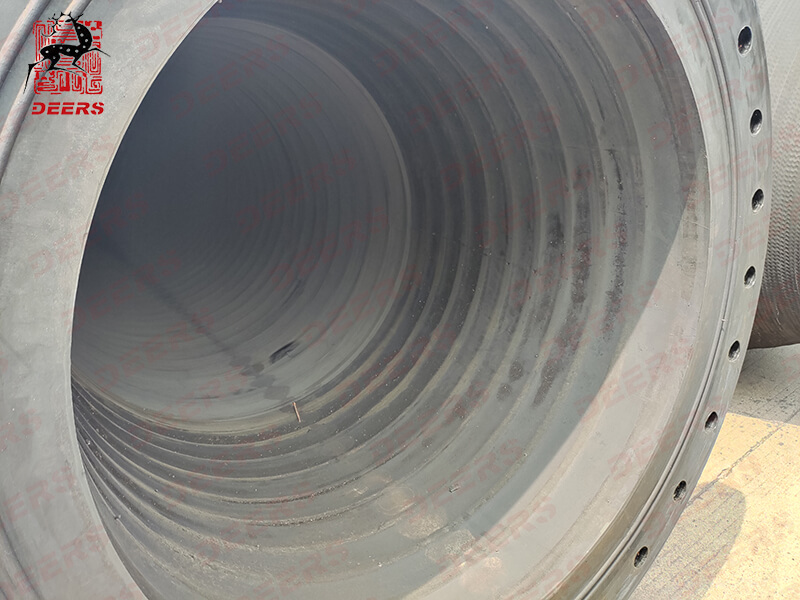
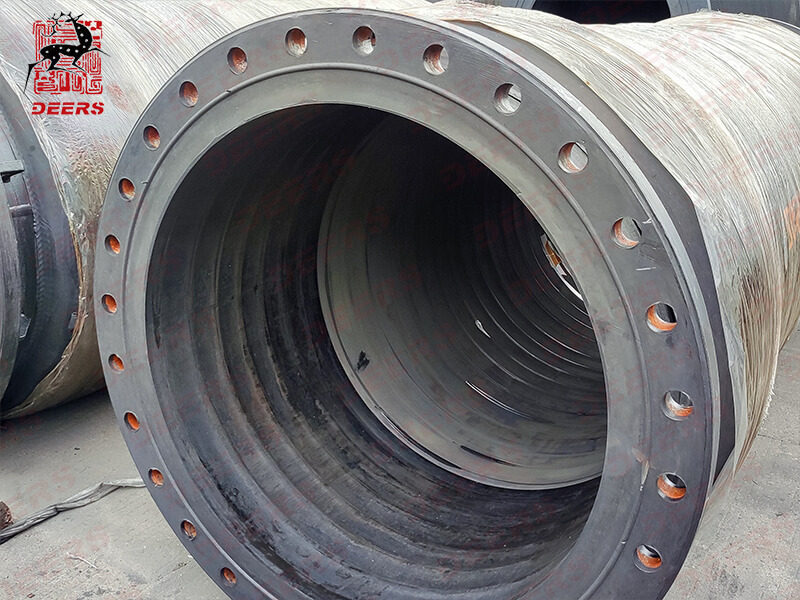
However, armored hoses are not necessary for every dredging application. Their additional weight, flexibility characteristics, and structural design must also be considered.
Key Point
Selecting the appropriate lining structure for the transported material is often more important than simply increasing lining thickness.
2. Reinforcement Structure: Strength, Pressure Resistance, and Flexibility
Dredging hoses must withstand more than internal abrasion. During operation, they may also experience internal pressure, suction forces, vibration, bending, and external mechanical loads. The reinforcement structure therefore plays an important role in maintaining hose integrity and operational reliability.
Multi-Layer Fabric Reinforcement
Many dredging hoses incorporate multiple layers of high-strength synthetic textile reinforcement. These layers help the hose withstand internal pressure, maintain structural stability, and accommodate normal operational movement. A properly designed reinforcement structure provides the required pressure resistance while preserving sufficient flexibility for the intended application.
Steel Wire Reinforcement
For suction hoses and other applications involving negative internal pressure, additional reinforcement may be required. Spiral steel wire reinforcement is commonly used to help prevent hose collapse under suction conditions. This is particularly important when a dredging pump creates negative pressure inside the hose. However, not every steel wire-reinforced hose is suitable for full-vacuum operation. The allowable vacuum level must be determined by the hose's specific design and verified performance.
Bending Performance and Structural Design
Dredging hoses used in floating pipelines, dredger connections, and shoreline transition sections often need to accommodate bending and movement. In these applications, the minimum bend radius (MBR) is an important technical parameter. If a hose is bent beyond its permitted limit, it may experience excessive deformation, reinforcement damage, or premature fatigue. For this reason, hose selection should consider not only working pressure but also bending requirements and expected pipeline movement.

3. Slurry Velocity: Why Faster Is Not Always Better
Even a dredging hose manufactured with high-quality materials may experience accelerated wear if the slurry flow velocity is unsuitable. Slurry velocity must be carefully controlled to balance transportation efficiency, pipeline wear, and energy consumption.
When Slurry Velocity Is Too High
At excessive flow velocities, solid particles can interact more aggressively with the internal surfaces of the pipeline. This may increase abrasive wear, particularly in areas where the flow direction changes. Hose bends, transitions, and other sections exposed to disturbed flow may experience more concentrated wear. Higher slurry velocities can also increase friction losses and energy consumption.
When Slurry Velocity Is Too Low
Insufficient slurry velocity can cause heavier solid particles to settle at the bottom of the pipeline. As sediment accumulates, flow resistance may increase, potentially resulting in partial or complete pipeline blockage.
The appropriate operating velocity depends on several factors, including:
- Particle size and density
- Slurry concentration
- Pipe internal diameter
- Pipeline layout
- Flow characteristics and pumping conditions
Key Point
The optimal slurry velocity is not necessarily the highest possible velocity, but one that provides reliable transportation with acceptable wear and operating costs.
4. Flanges and Connections: Potential Weak Points in Dredging Pipelines
A complete dredging pipeline generally consists of multiple hose and pipe sections connected through flanges or other suitable coupling systems. Although the hose body receives considerable attention, the reliability of its connections is equally important. Poor connection design or improper installation can result in leakage, operational interruptions, or premature component failure.
Flange Design and Compatibility
Depending on project requirements, dredging hoses may be supplied with steel flanges, rubber-covered flanges, or other engineered end connections. Regardless of the connection type, the end fitting must provide adequate structural strength and a reliable connection to the hose body. Flange dimensions, bolt-hole patterns, pressure ratings, and sealing arrangements should also be compatible with the connected pipeline components.


Sealing Performance
Improper flange alignment, uneven bolt tightening, or damaged sealing surfaces can lead to slurry leakage. In suction applications, poor sealing may also allow air to enter the system, reducing suction performance and affecting pump operation. Proper connection design, installation, and inspection are therefore essential for maintaining pipeline reliability.
Factory Inspection and Testing
Before delivery, dredging hoses may undergo several inspections and performance tests according to their design, applicable standards, and project requirements. Common inspections and tests include:
- Dimensional Inspection — Verifies key dimensions such as internal diameter, overall length, flange dimensions, and other specified parameters.
- Working Pressure Test — A hydrostatic test used to verify the hose's pressure-containing integrity and resistance to leakage under specified test conditions.
- Bending Test — Evaluates the hose's behavior under specified bending conditions and helps verify that it meets relevant flexibility requirements.
- Vacuum Resistance Test — For applicable suction hoses, this test evaluates resistance to excessive deformation or collapse under specified negative-pressure conditions.
Not all dredging hoses require identical testing procedures. The appropriate inspection program should be determined according to the hose type, applicable standards, and operating requirements.


5. Installation and Maintenance: Often Overlooked Factors
Even a correctly selected dredging hose can fail prematurely if it is improperly installed or operated. Installation conditions, external abrasion, and maintenance practices can significantly influence long-term performance.
Avoid Excessive Bending and Twisting
During installation, hoses should not be bent below their specified minimum bend radius. Unnecessary twisting should also be avoided, as it may introduce additional stress into the hose structure. For floating pipelines, engineers must consider the effects of waves, currents, tides, and dredger movement. These forces can produce repeated bending and dynamic loads throughout the operating period.
Minimize External Abrasion
Dredging hoses may come into contact with the seabed, rocks, quay structures, or other hard surfaces. Prolonged contact and repeated movement can damage the outer cover, potentially exposing reinforcement layers and reducing hose durability. Appropriate pipeline routing, support arrangements, and protective measures can help reduce external wear.
Conduct Regular Inspections
A maintenance program should be established according to operating conditions, project duration, and hose usage. Inspections should focus on:
- Visible damage to the outer cover
- Abnormal bulging or deformation
- Flange condition and connection integrity
- Signs of leakage
- Excessive bending or twisting
- Internal lining wear, where inspection methods are available
If abnormal wear or structural damage is detected, the hose should be assessed and appropriate corrective action taken before the problem develops into a major failure. For long-term dredging projects, maintaining inspection and operating records can also help identify wear trends and support more effective replacement planning.
6. Life Cycle Cost: The Lowest Purchase Price Is Not Always the Best Value
When purchasing dredging hoses, initial price is an important consideration. However, the lowest purchase price does not necessarily result in the lowest total operating cost. A less expensive hose that requires frequent replacement may lead to additional maintenance expenses, transportation costs, labor requirements, and operational downtime. In comparison, a hose designed for the actual working conditions may offer better long-term value, even if its initial purchase price is higher.
When comparing dredging hose suppliers, purchasers should evaluate several factors:
- Expected Service Life — Evaluate expected durability based on the transported material, operating conditions, and experience from comparable applications.
- Maintenance and Replacement Costs — Consider the costs of labor, lifting equipment, transportation, replacement components, and maintenance activities.
- Operational Downtime — Unexpected pipeline failure may interrupt dredging operations and leave expensive equipment temporarily idle.
- Spare Parts Availability — Reliable replacement supply and reasonable lead times are important, particularly for remote or large-scale projects.
- Quality Assurance and Technical Support — Relevant inspection reports, technical documentation, and engineering support can help purchasers assess product suitability.
For long-term dredging operations, evaluating the total life cycle cost can provide a more meaningful comparison than considering purchase price alone.
Dredging Hose Procurement Checklist: What Should You Confirm Before Ordering?
Selecting the right dredging hose begins with providing accurate operating information. Before submitting a request for quotation (RFQ), dredging contractors and equipment purchasers should clarify the following requirements.
| Evaluation Item | Information to Confirm |
|---|---|
| Transported Material | Silt, sand, gravel, coral fragments, weathered rock, etc. |
| Material Characteristics | Particle size, hardness, concentration, and slurry density |
| Hose Dimensions | Internal diameter, length, and required quantity |
| Operating Conditions | Working pressure, maximum design pressure, flow rate, and slurry velocity |
| Hose Type | Discharge hose, suction hose, self-floating hose, or armored hose |
| Wear Resistance | Inner lining material, thickness, and relevant abrasion properties |
| Structural Performance | Reinforcement design, minimum bend radius, and vacuum rating where applicable |
| End Connections | Flange standard, dimensions, bolt-hole pattern, and pressure rating |
| Quality Inspection | Hydrostatic, dimensional, bending, and other applicable tests |
| Supplier Capabilities | Comparable project experience, delivery lead time, and technical support |
Providing detailed project information allows suppliers to recommend more appropriate hose configurations and helps reduce the risk of selecting products that do not match the actual operating conditions.
Tips: How to Extend Dredging Hose Service Life
- Match the hose design to the transported material. Conventional sand transportation and highly abrasive rock or gravel handling may require different lining materials and structural configurations.
- Maintain appropriate operating conditions. Control slurry velocity and operating pressure according to the pipeline design, and avoid excessive bending and unnecessary twisting.
- Establish a practical inspection and replacement plan. Regular inspections, operating records, and timely replacement of damaged components help prevent unexpected failures.
Nanjing Deers supplies a range of dredging pipeline products, including dredging discharge hoses, suction hoses, self-floating hoses, and armored dredging hoses. If you are selecting dredging hoses for an upcoming project, contact Nanjing Deers with your technical specifications and application details to identify a suitable hose solution for your dredging operation.
Frequently Asked Questions
Does a thicker lining always mean a longer-lasting hose?
Not necessarily. A thicker lining provides more wear allowance, but it also adds weight and reduces flexibility, which can make installation and handling harder. The right lining material and thickness should be matched to particle characteristics, pressure, velocity, and installation conditions.
Do I need an armored hose for every dredging job?
No. Armored hoses suit highly abrasive materials such as coral fragments, coarse gravel, and weathered rock. For fine sand and ordinary sediment, a conventional wear-resistant rubber lining is usually sufficient. The extra weight and flexibility of armored hoses should also be considered.
Is a higher slurry velocity always better for dredging?
No. Excessive velocity increases abrasive wear and energy consumption, while velocity that is too low lets particles settle and may cause blockage. The optimal velocity balances reliable transportation with acceptable wear and operating costs.
What are the weakest points in a dredging pipeline?
Flanges and connections are common weak points. Misaligned flanges, uneven bolt tightening, or damaged sealing surfaces can cause leakage, and in suction applications poor sealing can let air in and reduce pump performance.
Why is the cheapest hose rarely the best value?
Frequent replacement adds maintenance, transport, labor, and downtime costs. A hose matched to the actual working conditions often offers better long-term value even at a higher purchase price, which is why total life cycle cost matters more than price alone.