

Pressure Design of Dredging Pipelines: From Pump Performance to Pipeline Safety
Date:2026-06-30
Dredging pipelines are essential for transporting slurry mixtures during hydraulic dredging operations. The pressure capability of a dredging pipeline directly affects operational safety, pumping efficiency, and the service life of the pipeline system.
Unlike conventional water pipelines, dredging pipelines handle a mixture of water and solid particles. Variations in slurry concentration, particle size, pipeline length, and pump operation can significantly influence pressure conditions.
Therefore, pipeline pressure selection should be based on a complete hydraulic analysis rather than only considering pipe strength.

1. How is Working Pressure Determined for a Dredging Pipeline?
The working pressure represents the pressure inside the pipeline during normal dredging operation.
It mainly depends on the interaction between:
- Dredge pump performance
- Pipeline hydraulic resistance
- Slurry characteristics
Dredge Pump Influence
The dredge pump provides the energy required to transport slurry through the pipeline.
The actual pressure generated by the pump depends on:
- Pump speed
- Flow rate
- Pump head
- Slurry density
A higher slurry density generally requires higher pumping energy to maintain the same transportation performance.
Pipeline Hydraulic Losses
During slurry transportation, pressure is consumed by pipeline resistance, including:
- Friction loss along straight pipeline sections
- Local losses from bends, couplings, and fittings
- Elevation changes
- Additional resistance caused by high solids concentration
The longer the pipeline distance or the higher the slurry concentration, the greater the required pumping pressure.
The operating condition of a dredging pipeline system is determined by the relationship between:
Pump performance curve and Pipeline system resistance curve
The point where these two curves intersect represents the actual operating condition, including:
- Flow rate
- Pipeline pressure
- Pump operating efficiency
A properly designed system should operate within the stable area of the pump curve to avoid:
- Insufficient flow
- Excessive pressure demand
- Pipeline blockage risk
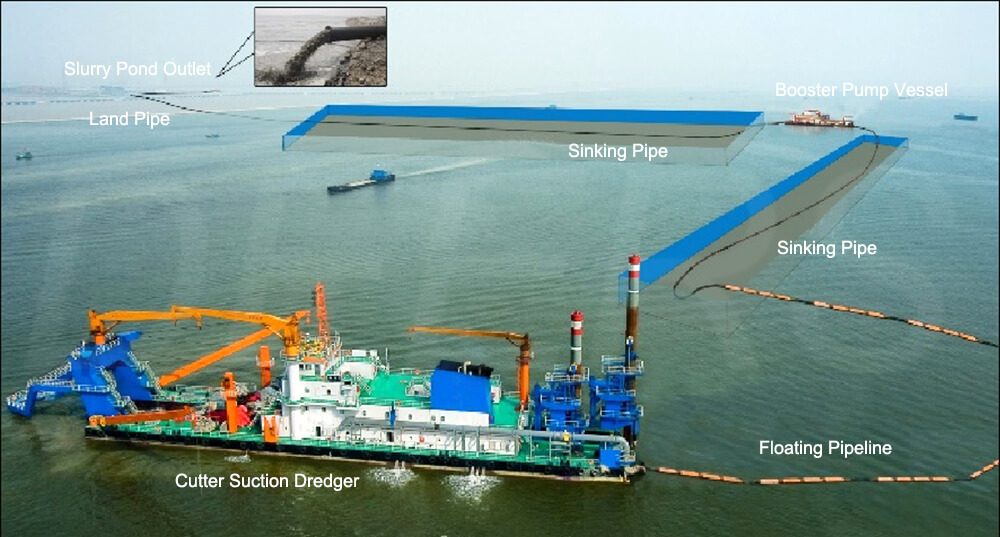
2. Design Pressure Selection
Design pressure is the pressure value used for pipeline structural verification.
It normally includes a safety margin above the expected working pressure:
Design Pressure = Working Pressure × Safety Factor
The selected safety margin depends on project conditions, including:
- Pipeline length
- Operating stability
- Slurry properties
- Pressure fluctuation risks
3. Burst Pressure and Safety Verification
Burst pressure represents the maximum pressure a pipeline can withstand before failure.
It is mainly used for:
- Product qualification
- Safety verification
- Extreme condition assessment
For rubber dredging hoses, the burs pressure is at least 3 times the working pressure.
Rubber hoses manufactured according to ISO 28017 standards have a burst pressure that is 3 times their working pressure.
The pressure rating of a dredging pipeline is determined by the interaction between the dredge pump, slurry properties, and pipeline system.
A reliable pressure design should consider:
- Hydraulic performance
- Material characteristics
- Safety margins
- Testing requirements
Proper pressure evaluation helps ensure stable dredging operations and long-term pipeline reliability.
Nanjing Deers Industrial Co., Ltd
Tel:86-25-84507790
Fax:86-25 84660486
Whatsapp:+86 13376094258
Email: benny@chinarubberfender.com
Next: 2250H Super Cell Rubber Fender System Supplied for LNG Terminal in Guangzhou
RELATED
- Cell Fenders Successfully Installed in Southeast Asia
- Danforth Anchor: Design, Applications & Size Selection Guide
- DN1000mm Dredge Ball Joints Shipped to Southeast Asia for Dredging Project
- 2.5×4m pneumatic fenders have been successfully installed at the berth
- Repeat Order of D-Type Fenders Successfully Dispatched
- Complete Dredging Pipeline System
- ID900 dredging suction hoses have been delivered for CCCC
- 800H Arch Fenders were delivered for a client in Bangladesh