Welcome to Marine Rubber Fender Supplier - Nanjing Deers Industrial Co.,Ltd

Skype: evasky86
Whatsapp: +86 13376094258
E-mail: benny@chinarubberfender.com

Types of Vessel Berthing Methods for Offshore Platforms and Facilities
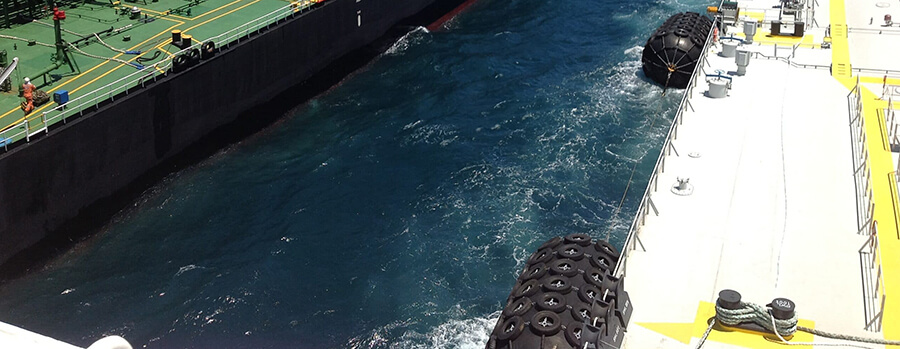
Before entering the safety zone of an offshore facility, the vessel master should select an appropriate berthing method based on the operational task, environmental conditions, and applicable safety requirements.

Berthing methods can generally be classified in two ways:

  • By vessel approach orientation:
    Alongside berthing, parallel berthing, and stern berthing.
  • By mooring arrangement:
    Anchored with mooring lines, mooring lines without anchoring, anchoring without mooring lines, or dynamic positioning without anchors or lines.

By combining these configurations, ten common berthing methods are formed.

a) Alongside Berthing with Anchoring and Mooring Lines

This method involves the vessel dropping anchor outside the berth area while the vessel’s side comes into contact with mobile pneumatic fenders or rubber-faced berthing structures installed on the offshore facility. The vessel is then secured using mooring lines.

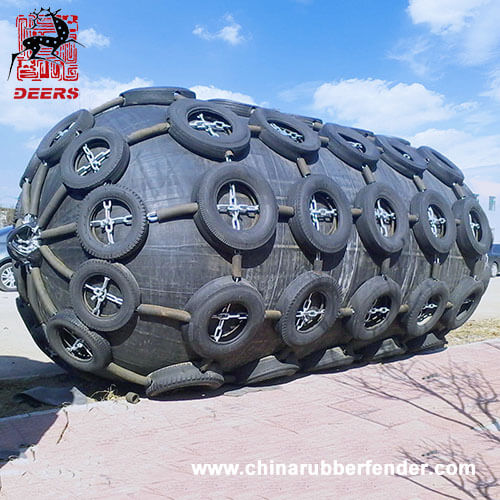
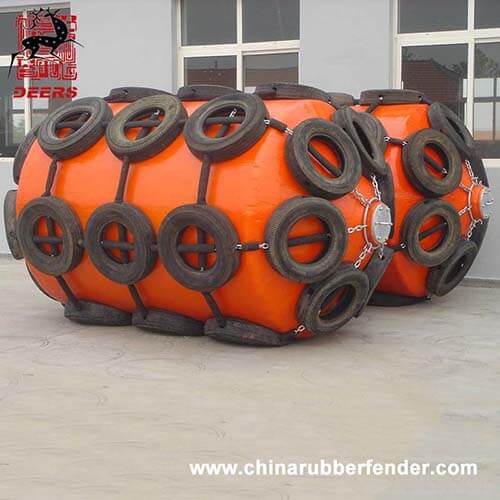
pneumatic fenders (1)

b) Alongside Berthing with Mooring Lines Only

In this method, the vessel’s side contacts the mobile fender system or rubber protection pads on the offshore facility and is secured using mooring lines without dropping anchor.

c) Alongside Berthing without Anchoring or Mooring Lines

The vessel maintains its position entirely through propulsion and maneuvering control while its side remains in contact with the offshore facility’s fender system.

d) Parallel Berthing without Anchoring or Mooring Lines

The vessel maintains a position parallel to the offshore facility, or with the stern slightly angled toward the berth. The angle between the vessel side and the berthing face is generally maintained within 0°–45°, while keeping a safe operating distance through dynamic maneuvering control.

e) Stern Berthing with Anchoring and Mooring Lines

The vessel drops anchor directly ahead of the berth or within 45° up-current/upwind of the berth direction. Stern mooring lines are then connected between the vessel and the offshore facility.

The angle between the vessel heading and the perpendicular line to the berthing face is maintained within 0°–45°.

f) Stern Berthing with Anchoring Only

The vessel drops anchor ahead of the berth or within 45° up-current/upwind, while the stern approaches the offshore facility. Vessel position is maintained through propulsion control without using mooring lines.

g) Stern Berthing with a Single Stern Line and No Anchor

A single mooring line is connected from the up-current or upwind side of the offshore facility to the vessel stern. The vessel maintains a stern approach angle within 0°–45° relative to the berth’s perpendicular line.

h) Stern Berthing with Bow and Stern Mooring Lines

In this arrangement, the vessel’s bow is connected to a floating mooring buoy positioned ahead of the berth, while stern lines are secured to the offshore facility. This configuration provides improved positional stability during operations.

i) Stern Berthing without Anchoring or Mooring Lines

The vessel approaches the offshore facility stern-first and maintains position entirely through dynamic maneuvering and propulsion control, without anchors or mooring lines.

j) Environmental Load Tracking Berthing without Anchoring or Mooring Lines

This advanced berthing method relies entirely on propulsion and dynamic positioning systems. The vessel stern approaches the offshore facility while maintaining a fixed safe distance.

During the operation, the vessel heading continuously adjusts to follow the direction of minimum environmental load, including changes caused by wind, waves, and currents.

Different offshore berthing methods are designed to accommodate varying operational requirements, environmental conditions, and facility layouts.

Selecting the appropriate berthing arrangement is essential for ensuring:

  • Operational safety
  • Vessel stability
  • Efficient cargo or personnel transfer
  • Reduced risk of collision or structural damage

Modern offshore operations increasingly combine advanced maneuvering systems, mooring technologies, and marine fender systems to achieve safer and more efficient berthing performance.

Related Products

Prev: